Whatsapp
There is a dangerous illusion taking hold beyond Israel’s borders: that Iran was “deterred,” that it “absorbed the blow,” that the balance has somehow shifted toward restraint. This illusion is comforting. It is also wrong.
Iran is not licking its wounds. Iran is rebuilding.
Quietly, methodically, and with intent, Tehran is restoring its ballistic missile production lines, repairing damaged air defenses, and recalibrating its regional posture. This is not a sign of weakness. It is preparation. Anyone who believes Iran’s ambition ends at recovery has fundamentally misunderstood the regime.
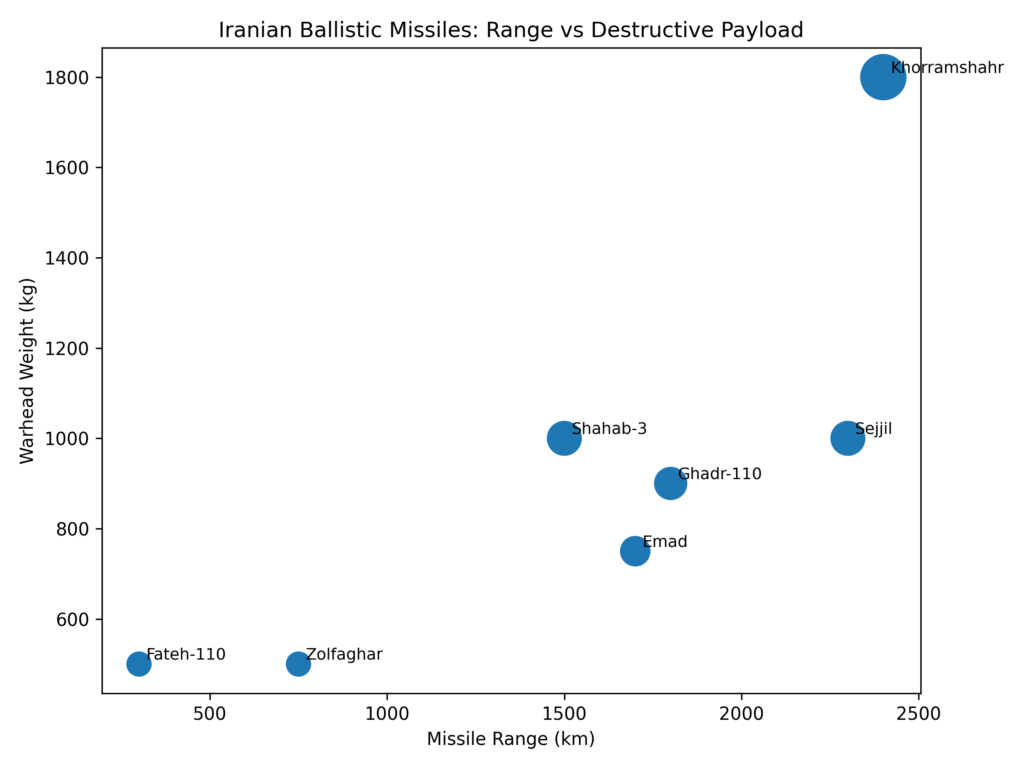
Tehran is methodically restoring its ballistic missile infrastructure — not inventing new weapons, but regenerating the same arsenal that already places Israel under strategic threat. The missile families remain unchanged: Shahab-3 derivatives, Ghadr and Emad precision variants, solid-fuel Sejjil systems, and heavy-payload Khorramshahr missiles. Their ranges — between 1,300 and 2,500 kilometers — still place every inch of Israel well within reach.
This is not speculative. It is structural.
Iran’s missile force is built around medium-range ballistic missiles designed explicitly for Israel: systems capable of carrying 700- to 1,800-kilogram warheads, increasingly paired with improved guidance and maneuverable re-entry vehicles. Solid-fuel systems, such as Sejjil, reduce launch preparation time, complicate detection, and narrow Israel’s window for preemptive action.
While the 12-Day War depleted portions of Iran’s inventory and damaged production sites, it did not erase the threat. Stockpile estimates before the conflict placed Iran’s ballistic missile arsenal in the low-thousands. Post-war assessments suggest attrition — but not collapse. More importantly, production lines are being repaired, dispersed, and restarted. Iran has always treated missile losses as temporary and replaceable.
Besides homegrown production, China has also delivered ballistic missiles to Iran to help replenish its ally’s arsenal.
Israel’s security establishment understands this well. There is no triumphalism, no false confidence. What exists instead is sober clarity: the next confrontation with Iran will be more complex, more layered, and potentially more destructive than the last.
Israel’s defensive answer is world-class — but not infinite.
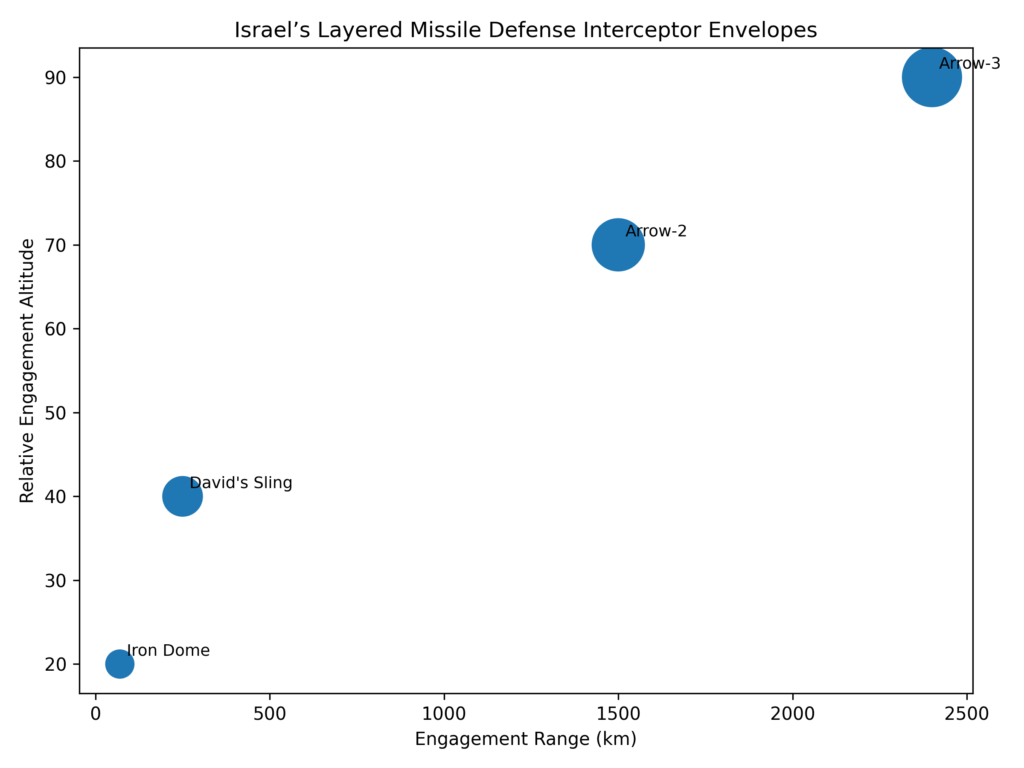
Iron Dome handles short-range rockets. David’s Sling covers medium-range ballistic and cruise threats. Arrow-2 and Arrow-3 sit at the top of the pyramid, intercepting long-range ballistic missiles in the upper atmosphere and even in space. Together, they form the most advanced layered missile defense network on earth.
Ballistic missiles are not political symbols. They are instruments of mass disruption. Iran does not invest in them for prestige or defense. It invests because missiles allow Tehran to threaten Israel directly while hiding behind proxies, geography, and diplomatic ambiguity. This is Iran’s preferred mode of warfare — pressure without accountability.
Some foreign observers rush to downplay Iran’s production capacity, arguing over numbers and timelines as if volume were the only issue. That misses the point entirely. Even limited missile output, when paired with precision guidance, regional dispersal, and coordinated proxy warfare, creates a strategic nightmare. Quantity matters — but intent matters more.
And Iran’s intent has not changed.
If anything, it has hardened. The regime views every clash not as a warning but as a lesson. Where defenses failed, they adapt. Where production was hit, they relocate. Where exposure occurred, they bury deeper. This is not improvisation — it is doctrine.
Former Israeli commanders have described Iran’s missile arsenal as a “super-conventional” threat — a capability that sits just below nuclear weapons in its strategic impact. That assessment should chill anyone still clinging to the idea that the nuclear issue is the only red line that matters. Iran doesn’t need a bomb to paralyze civilian life, overwhelm defenses, and impose unbearable pressure on Israel’s home front.
This is the strategic backdrop to Prime Minister Benjamin Netanyahu’s recent diplomatic movements — trips officially framed around alliances, coordination, and “regional stability.” No one seriously engaged in Middle Eastern security believes those are the real headlines.
Most know — quietly but clearly — that Iran is the file.
Netanyahu does not fly halfway across the world for optics. He travels when red lines are being tested, when coordination is required, and when decisions are approaching points of no return. Meetings at this level are not about whether Iran is a problem. That debate ended years ago. They are about timing, thresholds, and freedom of action.
The speculation is unavoidable: Israel is seeking guarantees — or at least understandings — about what it may be forced to do if Iran crosses certain lines. That could mean diplomatic cover. It could mean operational coordination. It could mean ensuring that when Israel acts, it will not be isolated or restrained after the fact by allies who prefer stability over survival.
Another likely component is deterrence signaling. Diplomacy is often warfare conducted quietly. When Netanyahu sits across from world leaders, Tehran is watching. Iran’s leadership understands subtext better than statements. They know when conversations are routine — and when they are preparatory.
Which brings us to the real danger: not Iran’s rebuilding — but Western complacency.
There will be calls for restraint. There always are. There will be think-tank papers arguing for patience, negotiations, confidence-building measures. Israel has heard this song before. Every time we listened, our enemies grew stronger. Every time we delayed, the price rose.
Deterrence is not declared. It is enforced.
Israel cannot afford to wait for Iran’s next move to become visible in the sky. Preparation must be active, not theoretical. Intelligence dominance, operational freedom, and strategic unpredictability are not luxuries — they are necessities.
Iran is rebuilding because it believes another round is inevitable. Netanyahu’s movements suggest Israel agrees — and is making sure it will not fight that round alone, unprepared, or with its hands tied.
History is unforgiving to those who mistake pause for peace.