Whatsapp
Turkey’s foreign policy since 2019 has shifted from opportunistic adventurism to a structured, region-wide projection strategy. Through military bases, naval power, proxy networks, and ideological patronage, Ankara has been slowly creating a ring of influence around Israel — an arc stretching from northern Syria to the Mediterranean and into the Palestinian political arena. The net effect resembles a deliberate encirclement. What is more puzzling, from an Israeli vantage point, is Washington’s restraint.
The below video shows how Turkey and Syria are working together to pressure and strangle Israel:
Understanding both developments requires a closer look at Ankara’s ambitions and the Trump administration’s calculus.
Ankara’s Strategy: Multi-Layered Pressure
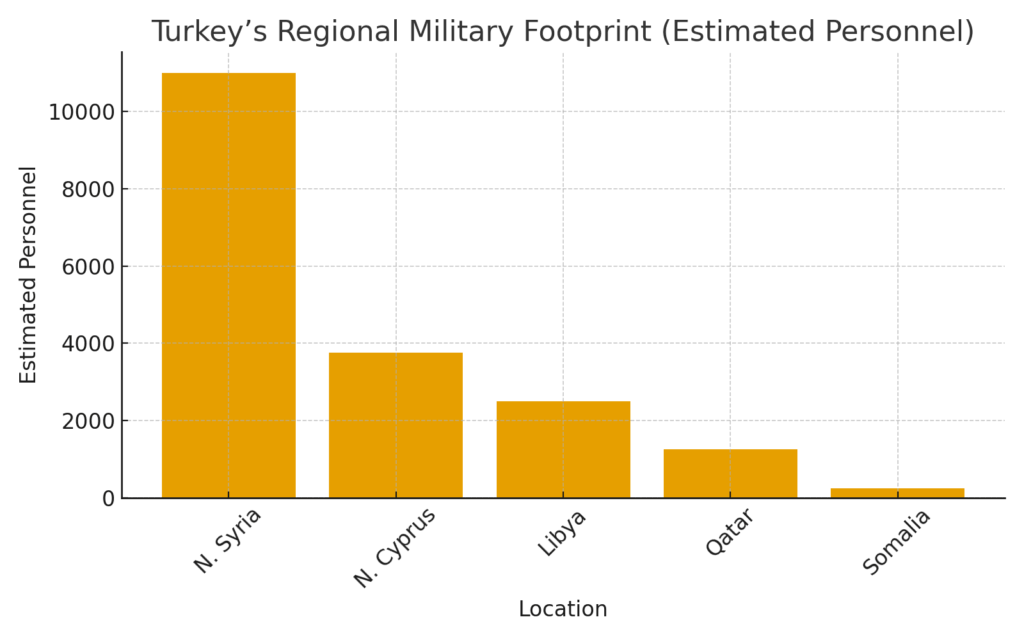
Turkey’s foreign policy architecture is built on three interlocking pillars: forward military presence, Islamist political patronage, and assertive maritime behavior. Ankara now controls meaningful territory in northern Syria, leverages its hold over northern Cyprus, and sustains entrenched military involvement in Libya.
Its growing influence in the Palestinian sphere is perhaps the most significant pillar of the encirclement posture.
“There is a need for a credible Palestinian civil administration… Turkey is ready to contribute to an international stabilization force that would support it.”
— Hakan Fidan, Turkish Foreign Minister
This is not altruism. It is an attempt to shape the governance space immediately adjacent to Israel’s southern flank, replacing Egyptian-U.S. structuring with Turkish-aligned political networks.
Why Israelis View This as an Emerging Threat
Jerusalem’s security community has been increasingly vocal. Analysts at the Institute for National Security Studies (INSS) waIsraeli analysts have grown increasingly alarmed. Ankara’s advocacy for Hamas leaders, its ideological interference in Gaza’s political future and its military entrenchment in Syria amount to a coordinated pressure system.
INSS senior researcher Dr. Gallia Lindenstrauss warned:

“Statements by Ankara raise concerns… Turkey may be becoming a strategic rival to Israel, especially through its military presence and influence in Syria and Gaza.”
— Dr. Gallia Lindenstrauss, INSS
The threat matrix includes:
Maritime Pressure: Turkey’s Libya maritime agreement and naval posturing challenge Israel’s energy routes.
Northern Axis Exposure: Turkish intelligence and military forces sit only a short geopolitical leap from the Golan corridor.
Gaza Politicization: Ankara attempts to carve a place for Islamist factions aligned with its worldview.
Why the Trump Administration Isn’t Confronting Ankara
Despite the mounting pressure on Israel, Washington has remained strikingly restrained.

1. Turkey’s Transactional Value
Turkey has positioned itself as indispensable on issues the U.S. wants to manage, not escalate: Syrian stabilization, Red Sea chokepoint dynamics, migration flows, and energy corridors. Confronting Ankara could unravel cooperation across multiple fronts.
2. Trump’s Leadership Style
The administration prefers personal diplomacy and transactional bargaining over formal pressure campaigns. This inherently favors continued engagement with Erdoğan, not disciplinary action. Let’s face it, Trump loves Erdogan and has said so himself.
3. NATO Fragility & Russia’s Shadow
Punishing Turkey risks pushing a major NATO military actor toward Moscow — something Washington sees as strategically disastrous at a time when the Russia–Iran partnership is tightening.
The result is strategic permissiveness: Ankara expands; Washington negotiates; Israel absorbs the fallout.
What Israel Must Do Now
Israel must prepare for a long-term strategic rivalry with Ankara — one fought through influence, intelligence and maritime friction rather than direct confrontation.
Recommended pillars:
- Strengthen northern monitoring of Turkish-backed militias and drone corridors.
- Deepen a counter-coalition with Greece, Cyprus, Egypt and the UAE.
- Expose Ankara’s destabilization inside NATO forums and European energy dialogues.
- Invest in Mediterranean naval parity, especially ASW (anti-submarine warfare), amphibious drones, and other capabilities that can bust any potential Turkish blockade.
- Continue to insist that no Turkish troops are stationed in Gaza or southern Syria.
- Southern Syria must remain demilitarized, and the buffer zone must remain in Israel’s hands.
Turkey seeks leverage and ideological dominance, not isolation. Israel can blunt that ambition — but only through a structured, multi-layered strategy.