Whatsapp
A two-week ceasefire between Washington and Tehran is not a peace agreement—it is a pause under tension. The region is not stabilizing; it is recalibrating. And for Israel, the central question is not whether the ceasefire holds, but whether it constrains—or accelerates—the next phase of conflict in Lebanon.
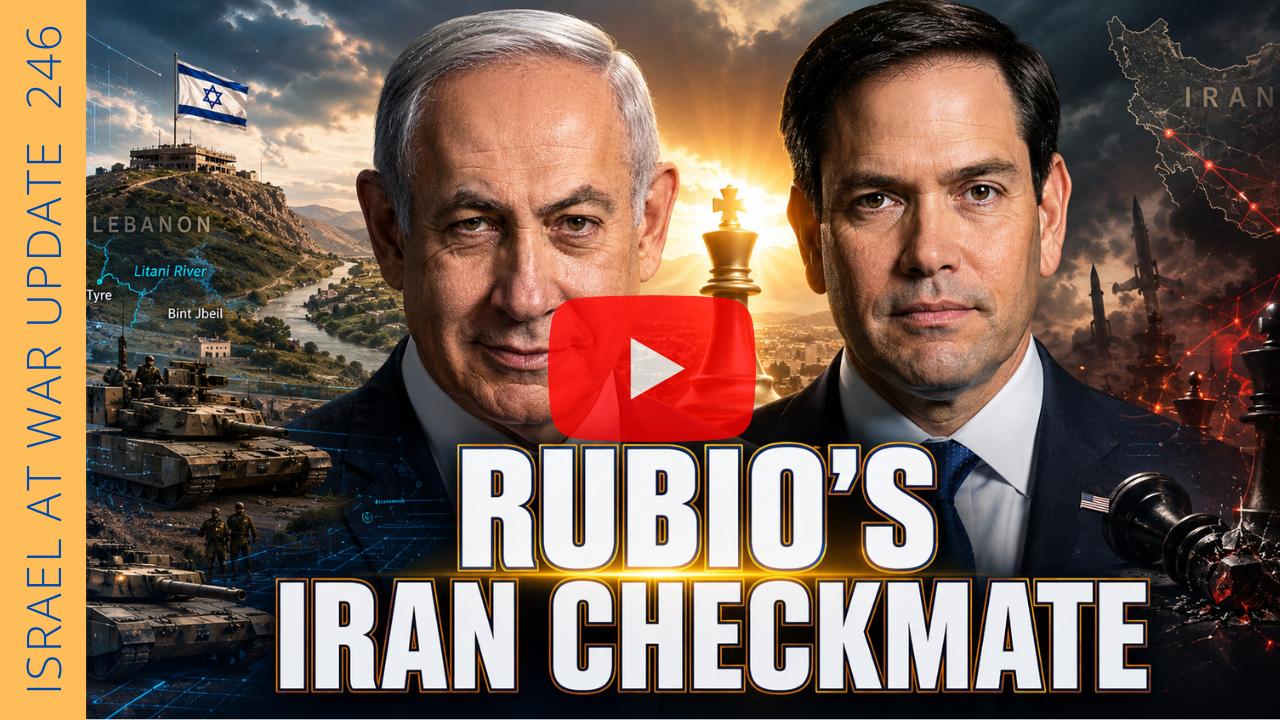
The public messaging is deliberately contradictory. On one track, Donald Trump signals overwhelming deterrence: U.S. forces will remain in position to ensure what he calls the “lethal prosecution and destruction” of hostile actors if the deal collapses. “If… it is not complied with… the ‘Shootin’ Starts,’ bigger… than anyone has ever seen,” he warned. On another track, Emmanuel Macron frames the ceasefire as a bridge toward broader negotiations, explicitly tying it to Iran’s nuclear program, missile activity, and regional behavior—including Lebanon.
Israel, meanwhile, is operating on a separate clock. Benjamin Netanyahu made clear that operations against Hezbollah are continuing unabated. “We continue to strike Hezbollah with power, precision, and determination,” he stated, following the targeted killing of a senior aide to Hezbollah leadership and a wave of strikes on weapons corridors and command centers in southern Lebanon. The Israeli message is consistent: the northern front is not subject to external diplomatic timelines.
The U.S.–Iran ceasefire is not isolated—it is implicitly linked to maritime security in the Strait of Hormuz, Iran’s nuclear trajectory, and its proxy network. Macron’s insistence that the ceasefire must extend “across all areas of confrontation, including in Lebanon” reflects a European assumption: that de-escalation can be compartmentalized and then expanded.
Israel does not share that assumption.
From Jerusalem’s perspective, Hezbollah is not a secondary front—it is the main conventional threat. The systematic targeting of weapons crossings and infrastructure in southern Lebanon signals a deliberate campaign to degrade Hezbollah’s logistics pipeline before any diplomatic freeze can lock in the current balance. In practical terms, Israel is shaping the battlefield now to avoid being constrained later.
Behind the scenes, Washington is likely attempting to sequence events: stabilize Iran first, then contain Lebanon. But that sequencing only works if Israel pauses—and there is little evidence it intends to. Trump’s posture—maximum deterrence paired with conditional restraint—gives Israel operational space while maintaining leverage over Tehran. It is a controlled ambiguity: escalation is threatened, not executed, unless the framework collapses.
The real question is durability. Two weeks is not a strategic horizon; it is a test period. If Iran complies, the ceasefire may extend into a broader negotiation phase. If it hedges—particularly on nuclear activity or maritime disruptions—the U.S. is signaling readiness to escalate rapidly. In either case, Hezbollah’s posture becomes critical. If it continues attacks or rearmament, Israel will not wait for diplomatic alignment.
Three trajectories emerge. The first is a managed extension: the ceasefire holds, Hezbollah activity decreases under pressure, and Israel slows—but does not stop—its campaign. The second is a fragmentation: Iran nominally complies while Hezbollah continues low-level conflict, creating a gray-zone war in Lebanon. The third is a breakdown: a violation—nuclear, maritime, or proxy—triggers U.S. action, pulling the region back into open escalation.
The most likely outcome is the second. The region is not moving toward resolution—it is settling into layered conflict, where ceasefires exist on paper while operations continue on the ground.
For Israel, the conclusion is straightforward: the northern front will not be outsourced to diplomacy. It will be decided in southern Lebanon.