
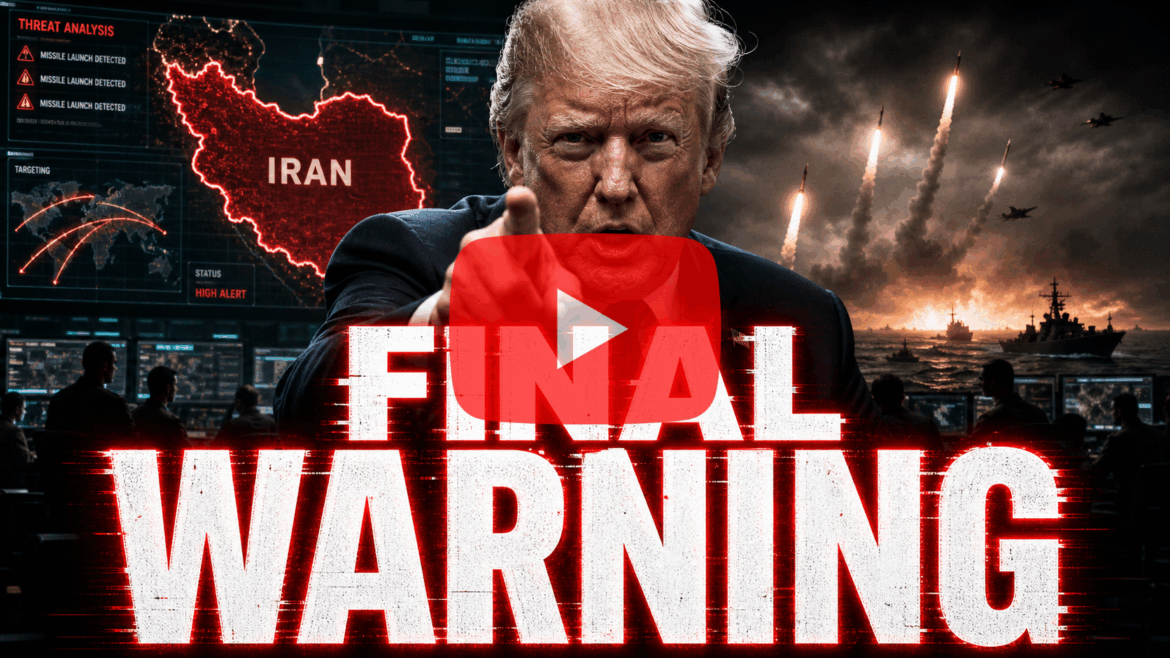
U.S. President Donald Trump stepped back in front of the press following continued Iranian ceasefire violations—and the message wasn’t diplomatic. It was strategic pressure, delivered in plain language: Iran isn’t maneuvering. It’s trying to survive.
And survival, according to Trump, now depends on one thing—cutting a deal with Washington.
When asked what would constitute a breach of the ceasefire, Trump refused to define clear limits. Instead, he leaned into calculated ambiguity: Iran already “knows what not to do.” That’s not a policy—it’s deterrence by uncertainty. Tehran is expected to miscalculate.
On the battlefield, Trump dismissed Iran’s recent actions as the behavior of a degraded force. Attacks on U.S. naval assets—carried out using small boats and light weapons—were framed not as escalation, but as evidence of collapse. According to Trump, Iran’s navy has effectively been neutralized, with multiple vessels already destroyed.
This is the key reframing: what Iran markets as asymmetric capability, Washington reads as strategic weakness.
Then came the internal front.
Why aren’t Iranians rising up?
Trump’s answer cuts against the Western narrative of “latent uprising.” The issue isn’t willingness—it’s capability. The population is unarmed, while the regime uses overwhelming force to maintain control. He pointed to mass killings of unarmed civilians, suggesting that even large-scale protests would be crushed quickly.
And then—deliberate ambiguity again. Asked whether the U.S. would arm the Iranian people, Trump refused to answer directly: “I don’t want to say.” That’s not hesitation. That’s signaling—both to Tehran and to internal opposition elements.
On China, Trump revealed the economic layer of the strategy. His message: Beijing doesn’t need Iranian oil anymore. The U.S. can replace it. He claimed that countries are lining up for American energy exports, framing this not just as U.S. policy—but as a global realignment away from Tehran.
This is where the pressure tightens: if China pivots, Iran loses a critical economic lifeline.
And then the core doctrine:
If the U.S. hadn’t intervened, Trump argued, Iran would have dominated the Middle East. Now, the situation has flipped—Tehran is no longer expanding. It’s contracting. Struggling. Buying time.
His conclusion was blunt:
Iran will not survive this phase unless it signs a deal with the United States.