
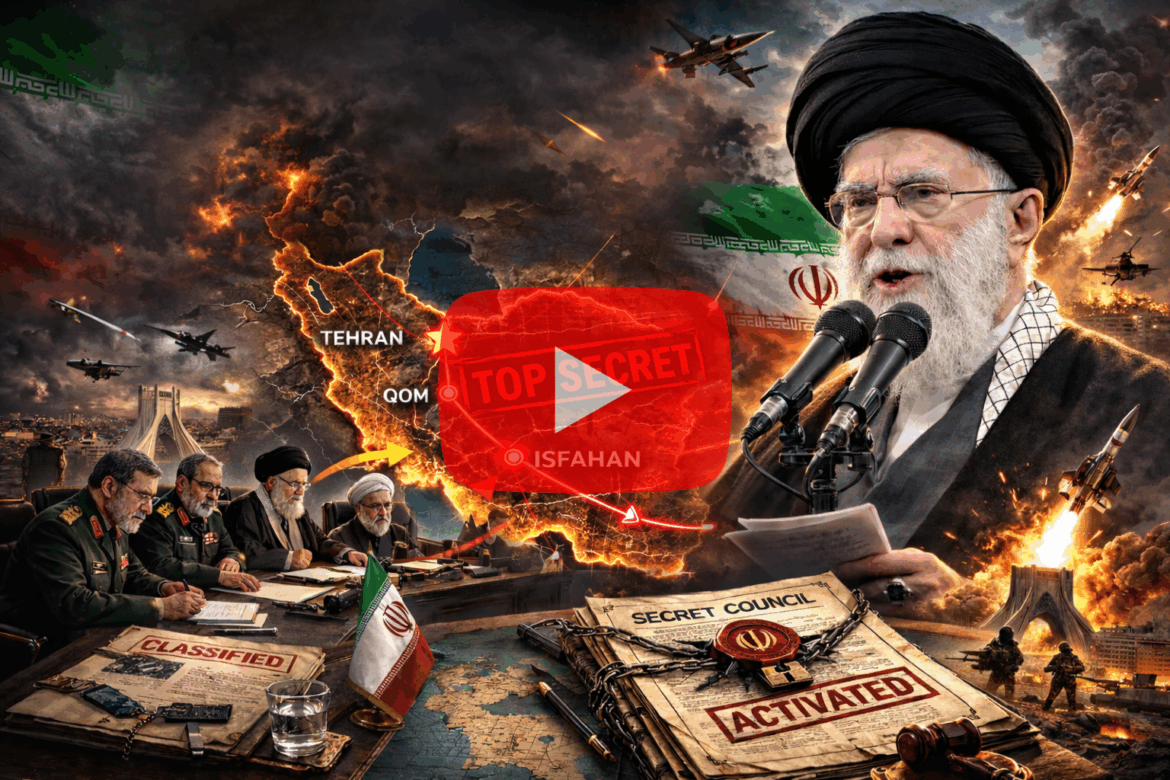
According to a report in The New York Times, Iran’s Supreme Leader Ali Khamenei is quietly preparing for the possibility of war with the United States — and perhaps something even more dangerous from the regime’s perspective: internal collapse.
The report reveals a regime operating in survival mode.
Khamenei has reportedly transferred meaningful authority to a tight inner circle. Most notably, Ali Larijani, currently Secretary of Iran’s Supreme National Security Council, has effectively been managing Iran’s affairs in recent weeks. Iran’s president, Masoud Pezeshkian, is said to lack the ability to initiate major moves without Larijani’s approval. In other words: the façade of civilian leadership remains, but real power has consolidated further around the security apparatus.
This is not a regime projecting confidence.
It is a regime bracing for decapitation strikes.
Senior Iranian officials — both civilian and military — have reportedly been instructed to appoint four replacements for each critical role in case they are eliminated. Authority has been pre-delegated in the event of communication breakdowns, assassinations, or infrastructure strikes. Succession planning has even extended to unnamed clerical heirs to Khamenei himself.
This is contingency planning at a scale that signals fear.
The names floated as possible emergency national leaders include Mohammad Qalibaf, Speaker of Parliament, and former president Hassan Rouhani. That such discussions are taking place underscores a sobering reality: the regime is no longer assuming continuity. It is preparing for disruption.
But perhaps the most revealing instruction is domestic.
Orders have reportedly been issued to prepare for internal unrest during wartime — including roadblocks and forceful suppression of riots. Tehran understands something Washington often underestimates: the regime’s greatest vulnerability is not necessarily American firepower. It is the Iranian people.
For Israel, this matters.
A regime that is pre-planning replacements and suppressing uprisings is not stable. It is brittle. It knows that sustained pressure — military, economic, psychological — could trigger internal fracture.
Jerusalem must read this correctly. Tehran is signaling readiness for escalation, but it is also exposing anxiety. A system that prepares four successors per position is a system that fears sudden removal.
The Iranian regime is not preparing from strength.
It is preparing for survival.