
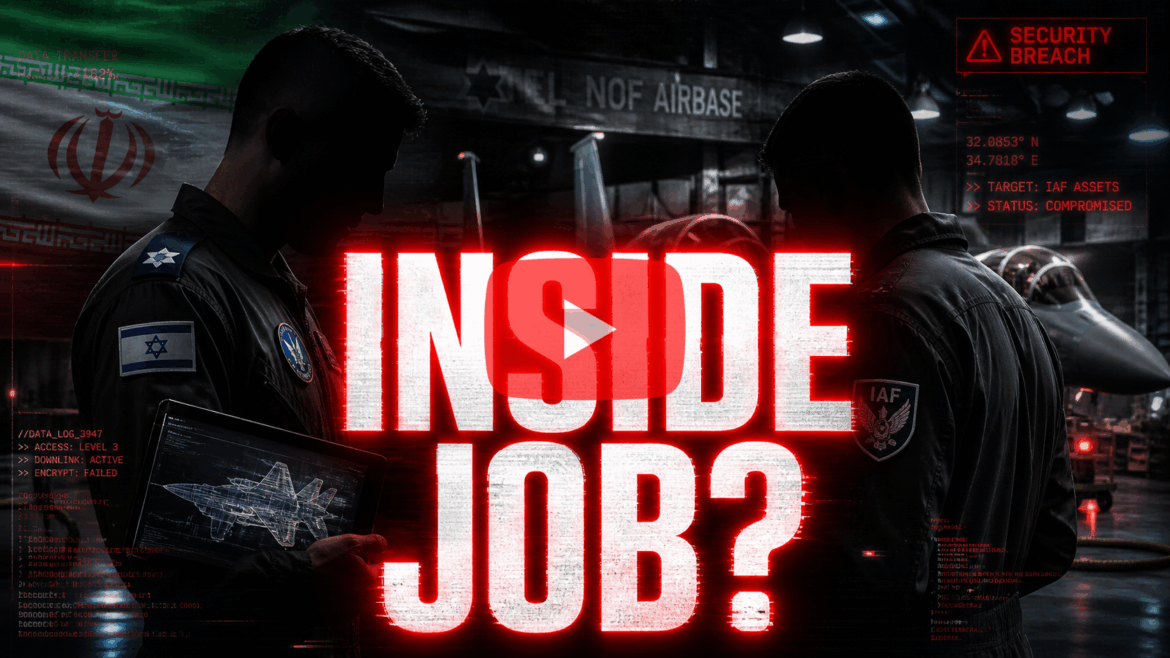
There’s a comforting illusion in Israel’s security culture: that the real threats come from across the border—missiles, drones, infiltrations. But every so often, reality cuts through that illusion with surgical clarity.
This is one of those moments.
Two Israeli Air Force technicians, stationed at Tel Nof Airbase, now stand accused of working—knowingly—on behalf of Iranian intelligence.
Not sympathizers. Not naive contacts. Operatives in place.
According to an indictment filed by military prosecutors, the pair maintained ongoing contact with Iranian handlers over a period of months, carrying out assigned tasks in exchange for money. One of them allegedly crossed a far more dangerous line: transferring training materials related to fighter aircraft systems, along with documentation of sensitive areas inside a military base.
This is not low-level leakage. This is targeted penetration.
The official charges reflect the gravity: aiding the enemy in wartime, passing information to an adversary, and maintaining contact with a foreign agent. These are not technical violations—they are strategic breaches.
And the most revealing detail is not what they did—but why.
During interrogation, both soldiers claimed they initially cut off contact after refusing to carry out tasks involving weapons. That’s the line they didn’t cross. But here’s the part that matters: they later attempted to reestablish contact—not under pressure, not under threat—but for financial gain.
Money opened the door. Iran walked through it.
Israeli security officials—from the Shin Bet, the IDF, and the police—were quick to issue a warning. But the subtext is more important than the statement itself.
Iran isn’t just probing Israel’s borders. It’s probing its people.
This case fits a broader pattern: Iranian intelligence shifting from classic espionage toward opportunistic recruitment—targeting individuals with access, vulnerabilities, and, above all, price tags. No ideology required. Just a channel, a payment method, and patience.
And that’s the uncomfortable takeaway.
Because if two technicians inside a sensitive Air Force base can be drawn into sustained contact with Iranian handlers, the question is no longer whether infiltration is happening.
It’s how much of it we’re not seeing.
What next?
Expect tighter internal monitoring, especially in technical units with access to sensitive systems. Expect more aggressive counterintelligence sweeps. But also expect Iran to keep trying—because from their perspective, this operation didn’t fail.
It exposed something far more valuable than intelligence.
It exposed a vulnerability.