
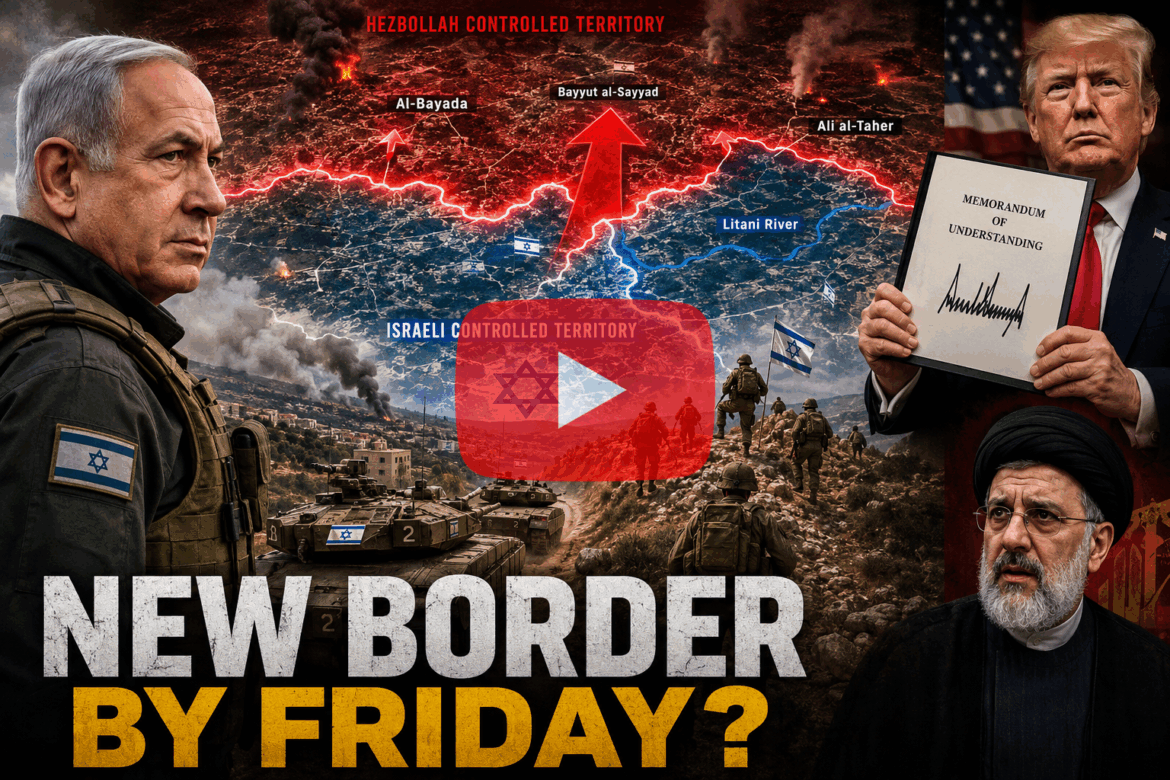
The Quiet Clause That Could Change the Middle East
The most important development in the emerging U.S.-Iran memorandum of understanding may not be what the agreement contains, but what it does not.
According to senior American officials briefing foreign journalists, an Israeli withdrawal from Lebanon is not a condition of the memorandum currently being finalized between Washington and Tehran.
That detail could prove enormously consequential.
For months, analysts assumed that any broad regional understanding involving Iran would eventually require Israeli concessions in Lebanon. Yet as reports emerge of rapid Israeli advances deeper into southern Lebanon, the apparent absence of such a requirement raises a provocative question:
Could Israel be racing to establish a new line of control before the agreement is signed?
If so, the implications extend far beyond the battlefield. They could shape the future map of the Middle East.
The Race to Establish Facts on the Ground
Lebanese sources have reported unusual Israeli military activity over the past several hours.
In the western sector, Israeli forces were reportedly advancing north from the coastal area near Al-Bayada toward Bayyut al-Sayyad when Hezbollah launched rocket attacks against maneuvering forces.
Separately, Lebanese sources associated with the Shiite axis reported that an Israeli armored column was attempting to move toward the strategically important summit of Ali al-Taher, prompting Hezbollah to fire an anti-tank missile.
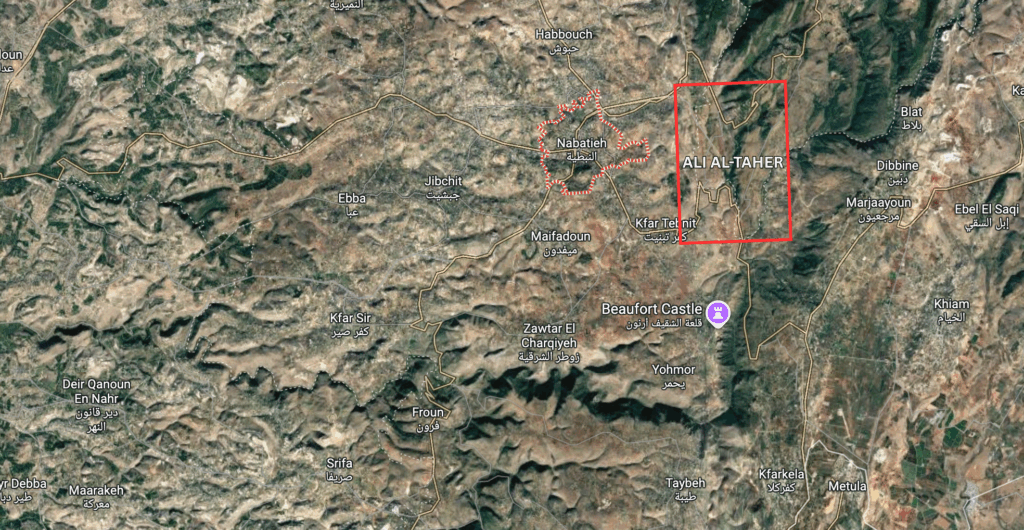
Whether every report proves accurate is less important than the broader pattern. Multiple sectors are reportedly seeing simultaneous Israeli movement, suggesting a coordinated effort rather than isolated tactical operations.
At the same time, Defense Minister Israel Katz publicly stated:
“Prime Minister Benjamin Netanyahu and I are leading a clear policy that the IDF will remain in the security zones in Lebanon, Syria and Gaza indefinitely.”
This was not the language of a temporary deployment. It was the language of a government preparing the public—and perhaps the international community—for a long-term reality.
The Lesson Israel Learned from 2000
Israeli decision-makers do not view southern Lebanon through the lens of diplomatic theory. They view it through the lens of hard experience.
When Israel withdrew from southern Lebanon in 2000, many believed international guarantees and Lebanese sovereignty would prevent the re-emergence of a major military threat along the border.
The opposite occurred.
Over the following years, Hezbollah transformed southern Lebanon into one of the most heavily armed terrorist strongholds in the world. Despite repeated international commitments and the provisions of UN Security Council Resolution 1701 following the 2006 war, Hezbollah remained deeply entrenched south of the Litani River.
The lesson was unmistakable.
International agreements may define intentions. Military geography determines reality.
For Israeli strategists, terrain overlooking the Galilee, key transportation corridors, and dominant observation points matter far more than diplomatic declarations issued in distant capitals.
The Territory Question Nobody Is Discussing
The timing of these developments is difficult to ignore.
Reports indicate that the U.S.-Iran memorandum could be formally signed within days. Simultaneously, Israeli forces appear to be expanding operations northward.
Policymakers are unlikely to state this publicly, but a logical strategic calculation may be at work.
If Israeli forces establish control over additional terrain before the memorandum takes effect—and if the agreement does not require withdrawal—those positions could become the starting point for any future diplomatic discussion.
In other words, the most important question may not be what is written in the agreement.
The most important question may be where Israeli soldiers are standing when the ink dries.
The reported movement toward Ali al-Taher is especially noteworthy. High ground has always played an outsized role in Middle Eastern warfare. Control of elevated terrain provides surveillance, intelligence collection, artillery observation, and defensive advantages that can influence an entire sector.
If Israel secures such positions, it would be creating strategic depth that did not previously exist.
Friday’s Signature, Tomorrow’s Border
History shows that borders are often determined not by negotiators but by realities established on the ground before negotiations conclude.
That possibility may now be unfolding in southern Lebanon.
Should Israel succeed in consolidating control over newly occupied areas before the memorandum is finalized, the result could be the emergence of a significantly expanded Israeli-controlled security zone stretching deeper into Lebanese territory than previously anticipated.
Such an outcome would represent the most substantial alteration of the military balance along the northern frontier in decades.
For Hezbollah, it would constitute a strategic setback and a loss of freedom of movement.
For Iran, it would underscore the limits of diplomatic leverage at a moment when Tehran appears focused on securing broader understandings with Washington.
For Israel, it could mark the beginning of a new security architecture—one based not on promises from Beirut, Tehran, or the United Nations, but on direct control of strategically significant terrain.
The coming days may therefore determine more than the future of a diplomatic agreement.
They may determine where Israel’s next northern border effectively begins.