Whatsapp
For decades, Israel’s leader has maintained that survival demands strength. After Oct. 7, that doctrine became a policy to reshape the region.
Two qualities of leadership define Benjamin Netanyahu at this pivotal moment.
The first is the ability to pursue an objective that appears impossible—relentlessly, patiently, for years—until circumstances align and it can finally be achieved. History remembers Winston Churchill for precisely this: breaking the paralysis of fear before Nazi aggression and dragging a reluctant world toward victory. Netanyahu’s struggle against Iran’s nuclear ambitions belongs to that same category of long, solitary battles waged against skepticism at home and resistance abroad.
The second is the moral stamina to withstand a tidal wave of internal and international condemnation—accusations of warmongering, opportunism, even genocide—without retreating from what one believes to be a historic necessity. “Bibi” has become, in global headlines, a nickname almost automatically paired with scorn. Yet repetition has dulled the insult. What remains is the record.
The story of Israel’s coordinated strike against Iran did not begin this year. It began publicly in 2015, when Netanyahu addressed the U.S. Congress in open disagreement with then-President Barack Obama.
He warned that the nuclear agreement under negotiation would not prevent Iran from obtaining the bomb but would instead clear its path. He described the metastasizing ideology of the Iranian regime and its declared commitment to destroying Israel, confronting America and undermining the West.
At the United Nations, he stated plainly: “The days when the Jewish people remained passive in the face of genocidal enemies are over.” After Oct. 7, 2023, that conviction hardened into policy. “Never again” was no longer a memorial phrase; it became a strategic doctrine.
To understand Netanyahu’s persistence is to understand his formation. His father, Benzion Netanyahu, one of the foremost historians of antisemitism, taught him the catastrophic price of ignoring warning signs. His brother Yoni fell at Entebbe in 1976. Netanyahu himself served in Sayeret Matkal and carries the scars of those battles. For him, Jewish vulnerability is not theoretical. It is an inherited memory.
His 2015 speech to the United Nations laid the groundwork for what became the Abraham Accords. Moderate Sunni states began to recognize Israel as a strategic partner against Iranian expansionism.
Meanwhile, Tehran tightened its alliance with Vladimir Putin’s Russia, deepened ties with China and North Korea, expanded its ballistic missile arsenal and armed proxies led by Hamas and Hezbollah—while continuing to chant “Death to Israel” and “Death to America.”
Oct. 7 crystallized the urgency. The Hamas massacre forced Israel to confront not only its immediate attackers but what Netanyahu long described as the head of the octopus—Iran.
International pressure mounted. The Biden administration, the United Nations and European leaders urged restraint, opposed Israeli operations in Rafah and along the Philadelphi Corridor and sought to limit the scope of military action. Netanyahu nonetheless insisted on dismantling Hamas, returning the hostages and, crucially, making the courageous decision to confront Hezbollah once and for all—entering Lebanon to dismantle a threat that had loomed over Israel’s north for nearly two decades.
This marked a new line in Israeli doctrine. After Oct. 7, survival could not rest on containment. It required preemption. It required, as Netanyahu framed it, refusing any existential threat to the Jewish people—not rhetorically, but militarily. To save the Jewish state, Israel would have to become lions.
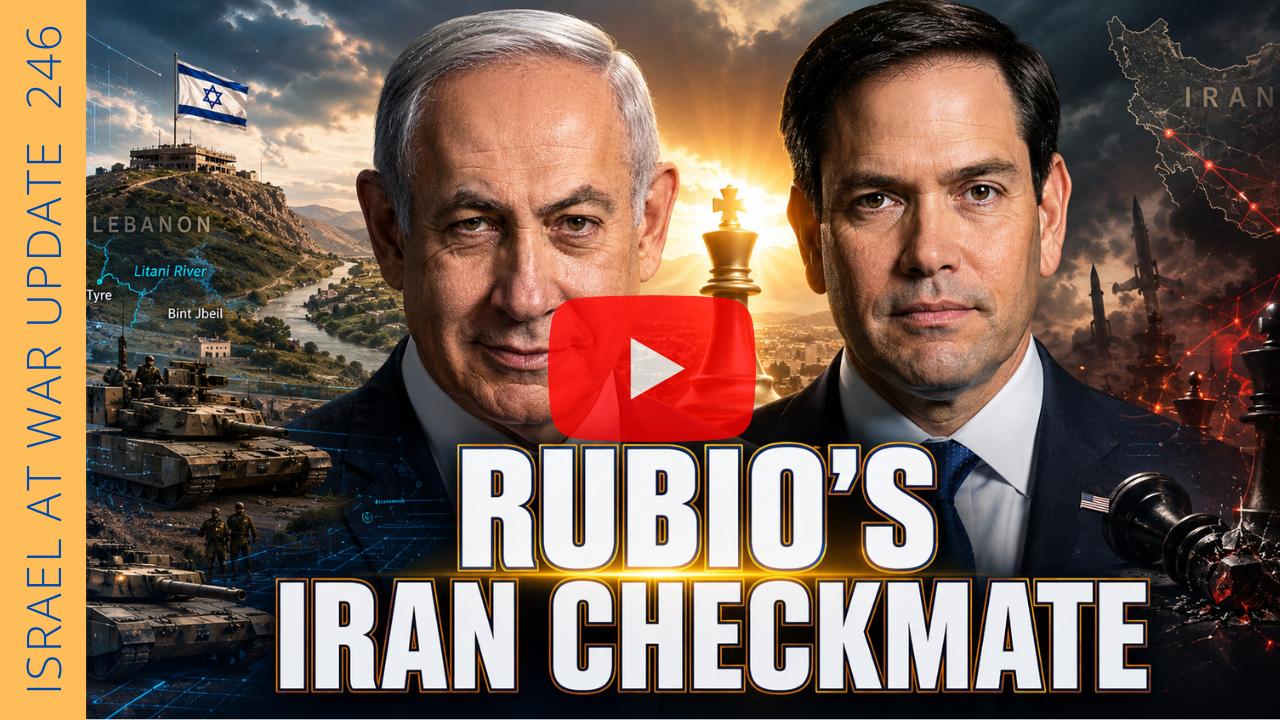
Now, after what officials described as a 12-day war last June and revelations that Iran possessed hundreds of kilograms of highly enriched uranium—enough, according to U.S. envoy Steve Witkoff, for multiple nuclear devices—the confrontation has entered a decisive phase. Iranian strikes extended beyond Israel to Gulf states and even European-linked assets, reshaping regional calculations.
The choice before Israel is not between mere transformation and escalation. It is between a war of necessity for survival and a transformative strategic breakthrough that could open the way to a different Middle East—and perhaps a different global alignment.
Netanyahu has long wagered that strength is the precondition of peace. Excellence, not accommodation, is his horizon. Ten years after his warning to Congress, Israel is no longer alone in its assessment of the Iranian threat.
Beyond close coordination with U.S. President Donald Trump, a widening circle of nations now recognizes that partnership with a regime rooted in ideological aggression is untenable.
History rarely offers clean alternatives. Yet this moment carries more promise than many admit. If the Iranian axis collapses, the region may move beyond the perpetual shadow of jihadist coercion. The Abraham Accords could expand. Strategic cooperation—from the Gulf to Europe and beyond—could solidify into something durable.
Netanyahu’s vision has come at a high price—military, diplomatic and personal. But the horizon he pursues is not endless war. It is a Middle East in which Jewish survival is no longer negotiated but secured.
The alternative was continued vulnerability. The wager now is that by choosing strength, Israel has not only defended itself but opened the door to a new regional order.