Whatsapp
U.S. Vice President JD Vance and U.S. Secretary of State Marco Rubio are pursuing competing approaches to Iran and Lebanon. Is this a genius grand strategy or destructive chaos?
If, like me, reality shows don’t interest you, then President Donald Trump’s hit television show “The Apprentice” and its “Celebrity” spinoff came and went without notice. But it looks like we’re being given another chance to watch something very much like the series, which ran from 2004 to 2017, and whose popularity helped boost Trump’s presidential ambitions.
U.S. Vice President JD Vance, 41, and U.S. Secretary of State Marco Rubio, 55, appear to be pitted against each other while pursuing competing approaches to solving the administration’s Middle East dilemma. Their efforts have taken on the appearance of the shows, where contestants compete against each other for Trump’s favor.
High stakes
But the stakes involved in the foreign-policy version of “The Apprentice” are a lot higher than the $250,000 per annum job in the Trump organization that went to the winners of the TV show. They involve not only the prospects for war and peace in the Middle East, but are also inextricably tied up with the prospects for either man to succeed Trump as the Republican presidential nominee in 2028.
Enough people found “The Apprentice” entertaining to make it a hit show. And there may be something to be said for a managerial style in business that forces subordinates to be on their toes and always pushing for an advantage. On the other hand, it can also be argued with equal, if not greater, validity that cultivating such a cutthroat culture in any enterprise is likely to do far more harm than good.
But when it comes to the question of putting an end to the nuclear threat from Iran, as well as its ballistic-missile program and its continued status as the world’s leading state sponsor of terrorism, it remains to be seen whether the Vance-Rubio competition will do more harm than good to the world, the United States or either man’s career.
The contradictions between the competing worldviews and strategies that Vance and Rubio are attempting to implement are obvious. Depending on your point of view, this is either the latest illustration of Trump’s strategic genius or proof that while his approach can work wonders sometimes, at other moments, they are evidence that a lack of presidential principle is a formula for defeat.
Alongside Israel, Trump launched a war against Iran on Feb. 28. At the beginning of that campaign and for several months beforehand, Rubio, who also serves as national security advisor, seemed to be Trump’s right-hand man. He led the way during the administration’s actions against Venezuela and other initiatives. But despite great military success being achieved by the allies against the Islamist regime, it neither fell nor surrendered. And by menacing shipping in the Strait of Hormuz, it created a global economic problem for a president who lacks a clear strategic vision or the patience for a drawn-out conflict.
Vance’s gambit
This left Trump stuck with an unpopular war that made gas prices spike and started doing him real political damage. Rather than sticking with the campaign to grind the Iranians down via a combination of military and economic pressure, he seems to have bailed on the war, agreeing to a ceasefire and then negotiations that have allowed Iran to regain the initiative and credibly claim to have defeated the Americans. At this point, Rubio seemed to be shunted aside and replaced to some extent by Vance, who had made no secret of his opposition to the decision to go to war.
In fact, Vance, who had been sidelined during the war, was then thrust into the position of leading the negotiations to extricate the United States from the conflict. In doing so, he started sounding and acting more like a representative of former President Barack Obama than of Trump, while seeking to ingratiate himself with the Iranians as he trashed America’s Israeli ally.
Yet the vice president quickly found himself being faced with the same delaying tactics, disingenuous statements and provocations that the Iranians had used against Obama and former President Joe Biden’s envoys. He’s tried to make nice and grant them concessions on a variety of points, including their continued possession of nuclear material, while leaving missile production and terrorism out of the talks. Even worse, with Trump’s support, Vance has agreed to link Israel’s efforts to prevent Iran’s Hezbollah allies from making northern Israel unlivable to the nuclear bargaining—in effect, legitimizing Hezbollah and Iran’s use of them to hold Lebanon hostage.
Despite all that, Vance and his fellow negotiators—special envoy to the Middle East Steve Witkoff, and presidential son-in-law and adviser Jared Kushner—have struck out in their efforts to turn the current ceasefire into something they can label as a “peace” agreement with a regime that has no interest in anything of the kind.
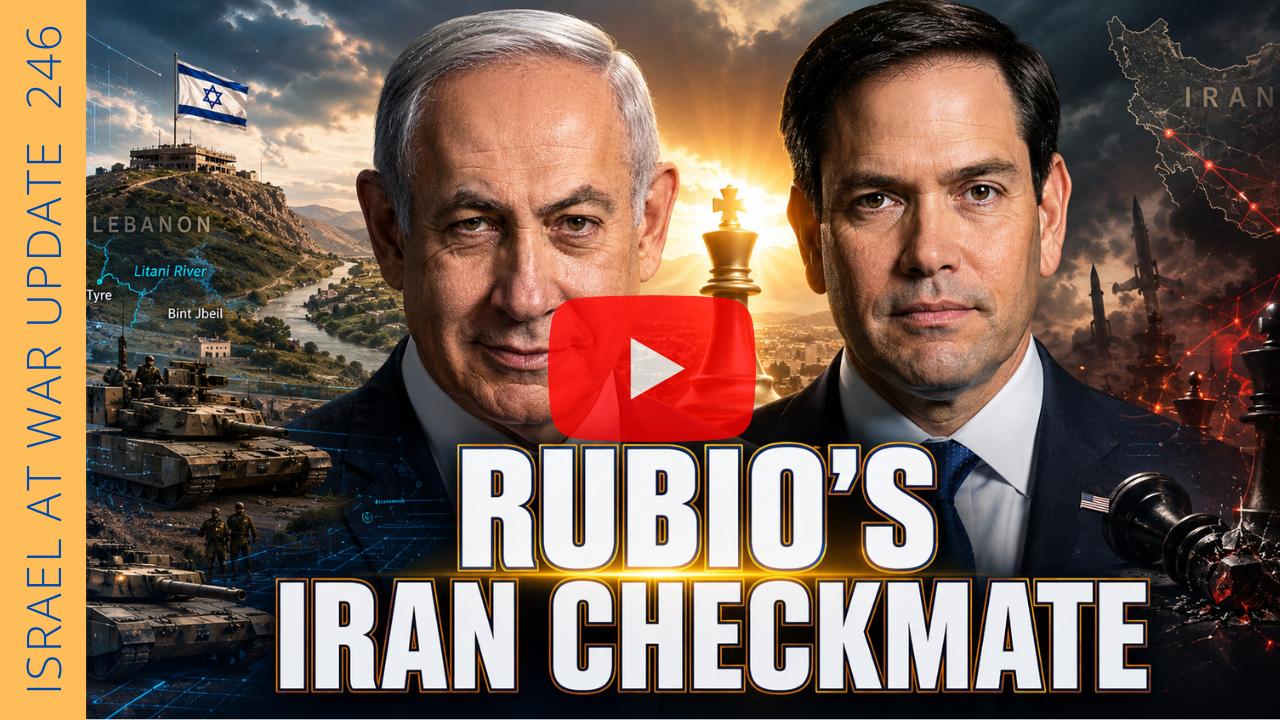
Rubio was not left waiting off-stage waiting to see what happened next. He was responsible for another competing negotiating track involving the conflict between Israel (which has been completely cut out of the talks with Tehran) and Iran’s Hezbollah auxiliaries in Lebanon. While Vance, Witkoff and Kushner got nowhere, Rubio actually managed to get the government of Lebanon to sign an agreement with Israel. It creates a framework for a process to restore Lebanese sovereignty, disarm Hezbollah, and thereby, work to achieve peace between Israel and its neighbor to the north.
Thanks to the intransigence of Hezbollah and its Iranian masters, as well as the weakness of the Beirut government, it’s more than likely that none of that may ever happen. Still, in contrast to what Vance has been trying to do with Iran, it conceded nothing to the enemies of both America and Israel, and was carried out from a position of strength as opposed to one of desperation. That sends Iran a powerful and much-needed message that it should not think it can get whatever it wants from the Americans.
Flipping the GOP on Israel
Vance’s foreign-policy positions have shifted, as is the case with many of his stands on a variety of issues, during the course of his young political career. He used to be a more conventional conservative but has gradually become something of a neo-isolationist who disdains most of America’s foreign-policy commitments other than an interest in fending off the geo-strategic challenge from China.
He touted Israel as the perfect MAGA ally in 2024 because it provided the United States with tangible assets and fought for itself. Now, however, he speaks of the Jewish state in much the same way as traditional U.S. State Department Arabists and right-wing antisemites have done: as an unruly and widely despised vassal state that compromises American interests and needs to do as it is told. Indeed, his recent verbal abuse of Jerusalem sounds like something that could just as easily come out of the mouth of one of his friends—former Fox News host and current antisemitic podcaster Tucker Carlson—or anti-Israel Democrats.
His approach to the current situation seems based on the notion that what began as a joint U.S.-Israeli war on Iran to prevent it from obtaining a nuclear weapon, as well as to halt its missile production and export of terrorism, was a bad idea. And he seems to regard the Jewish state’s efforts to prevent Tehran’s Hezbollah auxiliaries in Lebanon from continuing to make northern Israel unlivable as an unnecessary complication to his efforts to get a deal with the Iranians at virtually any cost.
That’s a reality that many Trump supporters find hard to accept. They prefer to believe that his acceptance of a Memorandum of Understanding with Iran, coupled with handing off diplomacy with Tehran from Rubio to Vance, is a clever misdirection play that would eventually turn what appeared to be an abject defeat into a victory. Their optimism has been buoyed by both the exchange of attacks between the United States and Iran in recent days, as well as Rubio’s brokering of an agreement between Israel and Lebanon, as proof that they were right.
But Trump’s detractors, including some who up until now regarded him as a reliable friend of Israel and a man who understood that Iran could not be relied upon to stand by any agreement, look at the same evidence and see something else.
The Iranians’ willingness to provoke Washington seems like a test of whether Trump is serious about restarting the war if the Islamist regime fails to negotiate seriously. Though the United States recently struck back over Iran’s firing on ships in the Persian Gulf, the limited nature of those strikes probably told leaders in the Islamic Revolutionary Guard Corps, who seem to be in charge in Tehran these days, that they need not fear a resumed war and that they have Trump’s measure, much as they did with Obama and Biden.
Who will win?
While Rubio has been derided by far-right critics as a “globalist,” the accusation is untrue. He is the genuine realist of the two Trump deputies since he labors under no delusions about Iran’s interest in, as Obama once said, “getting right with the world.” He also knows that the United States cannot safely abandon its allies in the Middle East without compromising its own interests or endangering its ability to confront China in the Pacific.
And so, which man will come out ahead in the competition to do Trump’s bidding—or to accomplish something that the president can live with, let alone help him boost his popularity ratings?
Vance’s determination to carry out a Republican version of Obama’s appeasement policy toward Iran could, if he is willing to keep giving in on every issue, potentially end the conflict for now and lower gas prices in the United States. That might make him the “Apprentice” winner, at least in the short term.
The problem with that path is that, as unpopular as the war might be, a demonstration of weakness that produces an Iranian defeat of the administration would be even worse for the president. It will tarnish his brand as the unpredictable but powerful world leader. After already investing so much political capital in the war, exchanging lower fuel prices for an Iranian victory won’t undo the damage done to the administration’s favorability ratings. Nor will it make the GOP more likely to win the midterms.
Moreover, if Trump realizes that the secretary of state’s stronger stand and a return to the effort to defeat Iran gives him the only pathway to a policy that won’t guarantee a defeat at the hands of a country he has long detested, that could make Rubio the winner of the competition.
A nightmare scenario
Vance’s flip-flop on Israel seems to be not so much rooted in belief in Iran as a credible negotiating partner or even disdain for involvement in wars in the Middle East. Rather, it could be a function of his reading of the current political climate in which demonization of Israel has been mainstreamed.
Though the majority of Republicans are still pro-Israel, a portion of the right, especially among younger voters, has been immersed in the same toxic ideas about race and Jews that have transformed the Democrats into a party that tolerates antisemitism. They’ve also been exposed to the drumbeat of anti-Israel and antisemitic incitement coming from podcasters like Carlson, far-right political commentator Candace Owens, neo-Nazi Holocaust denier Nick Fuentes and their celebrity enablers like Megyn Kelly.
Vance may have come to the conclusion that the path to victory in 2028 is one based on turning the GOP away from Israel. If Trump, ever the transactional actor and keenly sensitive to the polls, thinks he’s right about that, then he could discard his position as the most pro-Israel president since the founding of the modern Jewish state. That might lead, among other things, to him backing Vance as his successor and shelving Rubio and his pro-Israel policies
It’s a nightmare scenario that should scare friends of Israel and those Republicans who believe that adopting left-wing positions—on Iran or anything else—is both a calamity and political poison.
It’s also a prospect that many of Trump’s Jewish supporters utterly reject. They prefer to believe that the entire contest is an example of him trolling his opponents at home and abroad. From this point of view, the president is playing three-dimensional chess and setting up Vance to fail. They are counting on him to dump the appeasement track as soon as it makes political sense for him to do so.
In their favor is the likelihood that, regardless of the White House’s current intentions, Iranian intransigence will soon force Trump to discard Vance’s placating that country’s mullahs and military. That would mean that either in the coming weeks and months or after the midterms, Trump will resume the effort to force Tehran’s surrender or the fall of the terrorist regime. His faithful adherents base that hope on Trump’s pro-Israel record, as well as his detestation of bad bargains like the one his vice president has sought in vain to achieve.
Moreover, sticking with the position that led him to join the war isn’t just sound policy. Standing back and counting on the Democrats’ hopes for a return to power being sunk by their willingness to embrace antisemitic socialist extremists seems like the more sensible course of action.
If so, Rubio might eventually emerge as the victor in this bizarre contest with Vance. If not, the results of this new version of “The Apprentice” won’t just be disastrous for the secretary of state. It will be a blow to the effort to preserve the GOP as the party dedicated to opposing wokeness, antisemitism and appeasement, whether it comes from the left or the far right.