
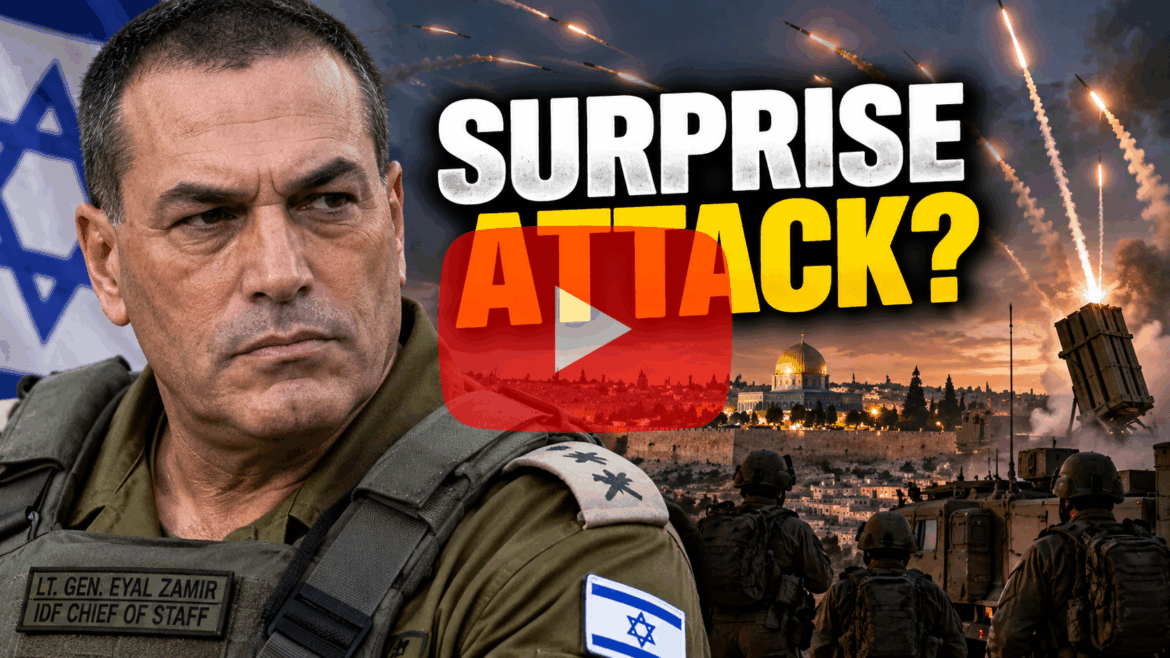
Israel’s military is entering the Jewish holiday season with a very different assumption than the one that existed before October 7: the enemy may attack when Israel least expects it.
IDF Chief of Staff Lt. Gen. Eyal Zamir warned that Israel is currently facing a “tense and volatile period across all sectors,” as the military prepares for the upcoming holidays.
But the most important part of his message was not the warning itself. It was the new baseline he says must guide the entire IDF.
“We continue to draw lessons, and as I have defined it, the baseline posture of the entire IDF is readiness for a surprise attack,” Zamir said.
That sentence represents one of the most important lessons Israel must internalize from October 7.
For years, Israel relied heavily on intelligence warnings and assessments of enemy intentions. The assumption was that Israel’s intelligence capabilities would provide enough advance notice to mobilize forces if Hamas, Hezbollah, Iran or another enemy decided to dramatically escalate.
October 7 demonstrated the danger of that approach.
Israel cannot base its security on correctly predicting what its enemies intend to do. It must maintain the forces, command structure and operational readiness necessary to respond even when intelligence assessments are wrong.
That appears to be exactly what Zamir is now testing.
Early Sunday morning, the chief of staff launched a surprise drill designed to examine how the IDF’s highest-level headquarters would function during a sudden multi-front scenario.
The timing matters.
Jewish holidays have historically represented periods of heightened vulnerability. The Yom Kippur War began on Judaism’s holiest day. October 7, 2023, occurred on Simchat Torah. Israel’s enemies understand that holidays can affect routines, staffing and public expectations.
Israel therefore cannot afford to relax simply because intelligence officials believe an attack is unlikely.
This is particularly important because Israel no longer faces one isolated enemy. A future surprise could involve several interconnected fronts and require the IDF to rapidly shift from routine security operations to full-scale war.
The real test, however, is not the drill.
It is whether this mentality becomes permanent.
October 7 taught Israel that intelligence can fail, assumptions can collapse and enemies can exploit complacency.
The IDF’s new baseline must therefore remain simple:
Expect the unexpected — and always be ready.