
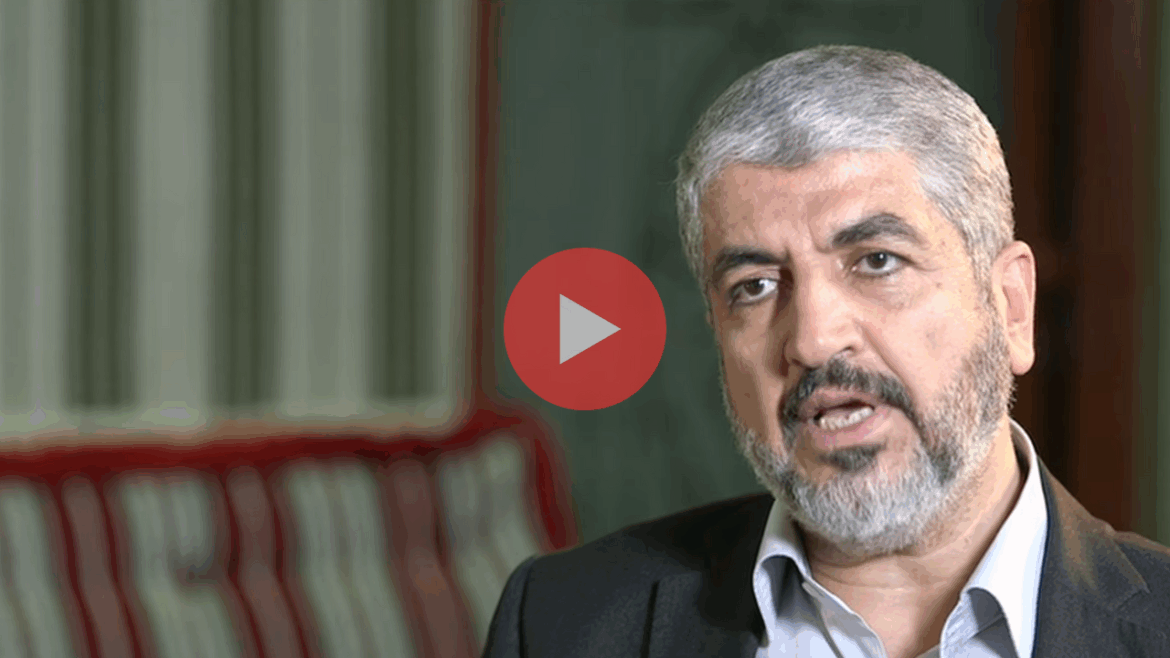
In a forceful and unmistakably defiant statement, senior Hamas official Khaled Mashal declared today that any demand for Palestinian factions to disarm is tantamount to asking them to “separate their soul from their body.” The remarks, delivered through Hamas-aligned media channels, underscore the movement’s total rejection of international efforts to link a future ceasefire or political arrangement in Gaza to the dismantling of its armed wing.
Mashal framed weapons not merely as tools of conflict but as a core component of Palestinian identity and national survival, insisting that “this weapon is an inseparable part of their right to defend their land and their people.” He added that attempts to impose demilitarization would “weaken the national spirit and the resistance—something the Palestinians will never accept.”
The timing of the message is significant. Diplomatic actors—including the U.S., Egypt, and Qatar—continue to push frameworks that envision phased disarmament or external security oversight in Gaza as part of a post-war arrangement. Mashal’s comments serve as a direct rejection of those conversations and a reminder of Hamas’s long-standing strategy: concede nothing that limits its military infrastructure.
For Israel, the statement will reinforce what officials have argued since October 7—that Hamas has no intention of laying down its arms, regardless of international pressure or humanitarian negotiations. Israeli analysts are already interpreting Mashal’s rhetoric as a signal to both internal and external audiences: Hamas intends to rebuild, rearm, and reposition, even under devastating battlefield losses.
Regionally, Mashal’s declaration will likely embolden hardline factions and complicate efforts by Arab states seeking a diplomatic off-ramp. Far from moderating, Hamas appears to be reasserting a doctrine of permanent armed resistance, positioning its weapons not as negotiable assets but as sacred obligations.