
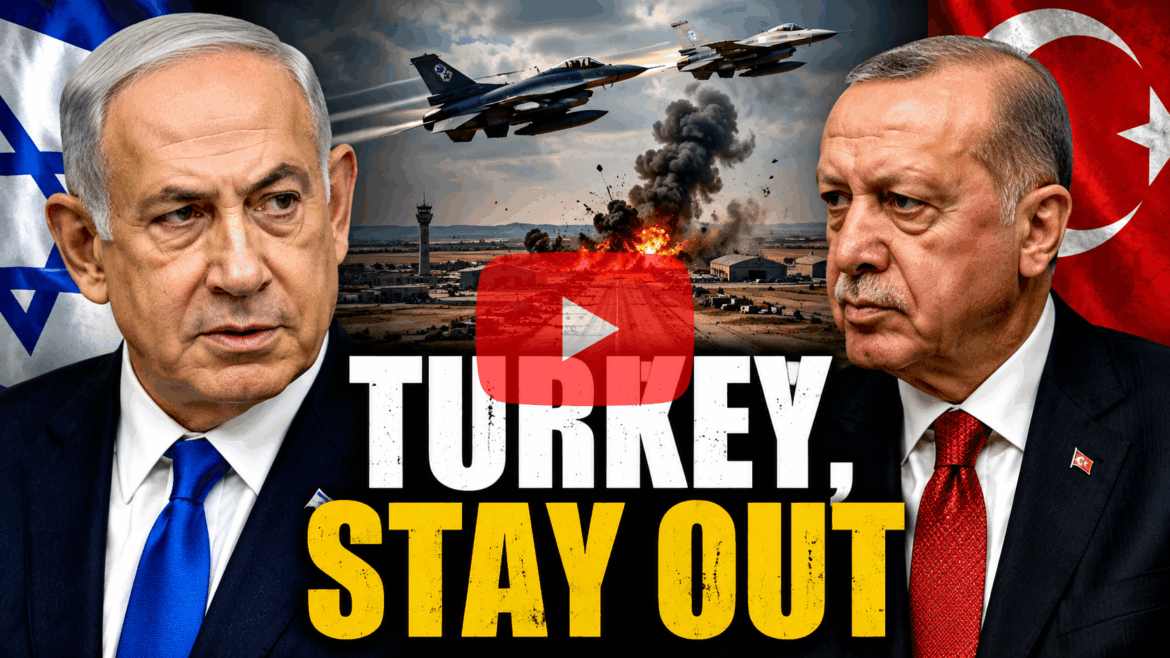
Prime Minister Benjamin Netanyahu has made Israel’s position unmistakably clear: Turkey will not be allowed to expand its military presence deeper into Syria in a way that threatens Israel’s security.
Netanyahu’s warning came after the Israeli Air Force struck the Abu al-Duhur military airbase in northwestern Syria, where Israel says Turkey was preparing to establish a military presence.
“We will not tolerate a Turkish military presence establishing itself further south, because it threatens us,” Netanyahu said in a video statement.
According to Netanyahu, Israel had already communicated its concerns directly to Ankara after learning that Turkey intended to establish itself at the Syrian airport.
“The message was conveyed, but apparently it was not heard, so we made sure they understood it better,” Netanyahu said, referring to the Israeli strike.
The significance of the operation extends far beyond one Syrian airbase.
Since the collapse of the Assad regime, Syria has become a strategic battleground involving Israel, Turkey, the new Syrian leadership and multiple regional actors competing to shape the country’s future. For Jerusalem, the central question is not simply who governs Damascus, but what military forces will ultimately be positioned near Israel’s borders.
Turkey’s growing influence therefore presents Israel with another potential strategic challenge.
Israel has spent years preventing Iran and Hezbollah from building military infrastructure throughout Syria. Jerusalem is now signaling that it will apply a similar principle to other foreign powers if their deployments create a direct threat to Israeli security.
The Abu al-Duhur strike should therefore be understood as more than another Israeli operation inside Syria. It was strategic signaling backed by military force.
Israel first delivered its warning diplomatically. When that warning apparently failed to produce the desired result, Israel demonstrated that its red lines are enforceable.
Netanyahu’s message to Ankara is simple: Turkey may have significant interests in Syria, but Israel will determine what military threats it is prepared to tolerate near its own borders.
And when Israel believes those red lines are being crossed, words may quickly be followed by action.