
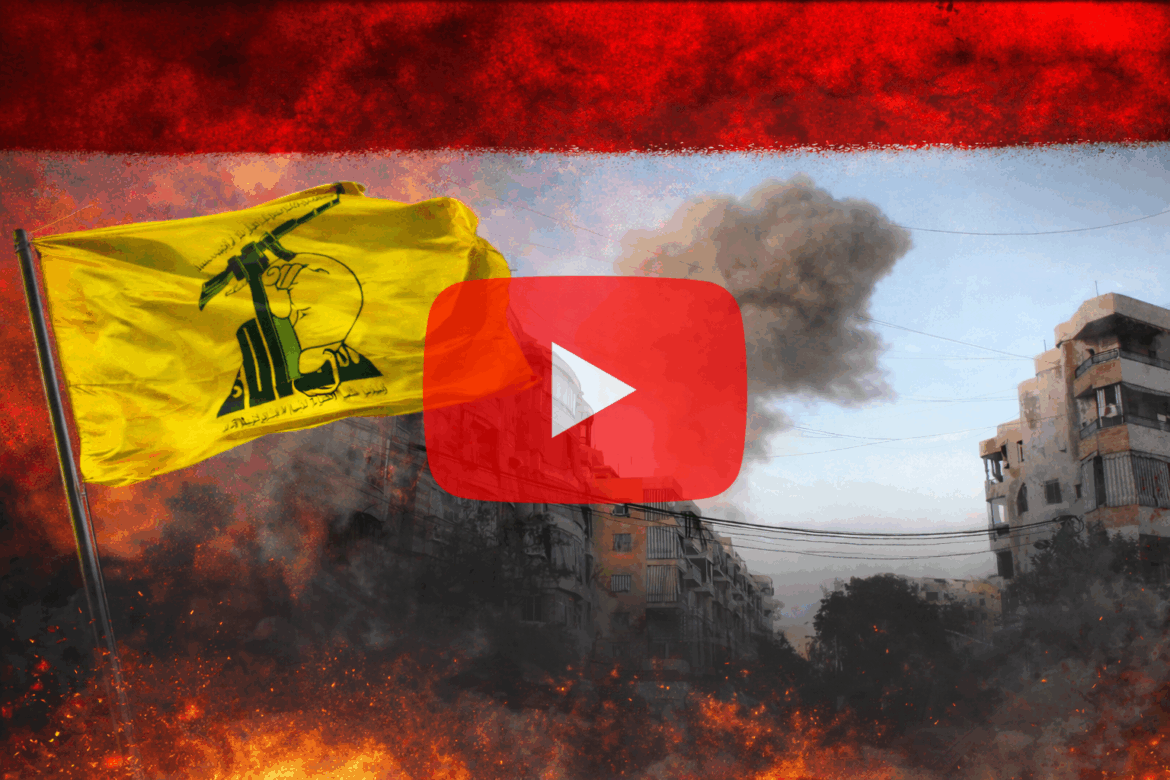
Hezbollah has now done what Tehran always hoped it could do on command: ignite the northern front precisely as the Iran–Israel–U.S. war enters its most volatile phase.
The sequence matters. On the night of March 1, 2026, rockets were launched from Lebanon toward northern Israel, triggering sirens in Haifa and across the Upper Galilee. The IDF confirmed that at least one rocket was intercepted and others fell in open areas under standing interception policy, with no immediate reports of casualties. Within hours, the escalation took on Hezbollah’s familiar hybrid signature. On the morning of March 2, drone alerts joined the rocket fire. Israeli air defenses downed multiple UAVs, according to military statements, as Hezbollah claimed responsibility for a combined barrage of rockets and drones, framing the attack as retaliation tied to the broader war with Iran.
This was not a rogue militia improvising. It was a calibrated entry.
Maj. Gen. Rafi Milo, commander of the IDF’s Northern Command, responded with language that was deliberately unrestrained. Israel, he said, has “significantly” bolstered forces along the Lebanon border. There is “no intention” to evacuate Israeli residents from the north. “We are prepared in defense and offense,” Milo declared, before detailing a “first wide wave of strikes in Beirut and southern Lebanon” targeting senior operatives, headquarters, and terror infrastructure. Then the warning: “The strikes continue, their intensity will increase.”
Intensity is not rhetoric. It is policy.
An Israeli security source speaking to Al-Hadath reinforced the message: there will be “no immunity for any politician or military figure in Hezbollah, and even for its supporters.” The source added that the new offensive “will be broad and comprehensive and may include a [ground] invasion.” In other words, Hezbollah has forfeited the illusion that it can calibrate violence without paying regime-level costs inside Lebanon.
Reports from southern Lebanon tell a parallel story. Heavy traffic jams in Aabbasiyyeh and surrounding areas reflect civilians moving northward as Israeli strikes expand. The optics are not incidental. When the IDF publicly states it is working to evacuate populations in southern Lebanon “for its protection,” it is not merely humanitarian messaging. It is strategic pre-clearance for sustained operations.
The larger question is how Hezbollah’s entry reshapes the war with Iran. Tehran’s doctrine has always relied on layered deterrence: proxies in Lebanon, militias in Syria and Iraq, pressure points in the Gulf. By activating Hezbollah now, Iran is attempting to stretch Israel’s air defense grid, dilute interceptor stocks, and force Jerusalem to divide its operational focus between the eastern and northern fronts.
But this move cuts both ways.
Once Hezbollah openly joins a regional war tied to Iran’s leadership decapitation, it ceases to be a background threat and becomes an active belligerent. That shift lowers Israel’s political threshold for deeper strikes in Beirut’s Dahieh district, expanded targeting of command networks, and potentially a limited ground maneuver designed to push launch capabilities farther from the border. What may have begun as “solidarity fire” risks becoming a campaign that degrades Hezbollah’s long-term capacity far beyond what Tehran intended.
There is also the American dimension. Washington’s posture in the Gulf and eastern Mediterranean was already signaling readiness. Hezbollah’s overt participation increases the likelihood of tighter U.S.–Israeli coordination in missile defense, intelligence sharing, and potentially suppression of long-range assets that threaten broader regional stability.
Hezbollah’s leadership understands this. Yet it calculated that not acting would fracture its credibility within Iran’s axis. Acting, however, invites a scale of retaliation that Lebanon’s fragile political structure can scarcely absorb.
The north is no longer a sideshow. It is now a second theater in a widening war. And once Hezbollah crossed that threshold, it may have discovered that symbolic participation carries existential consequences.