
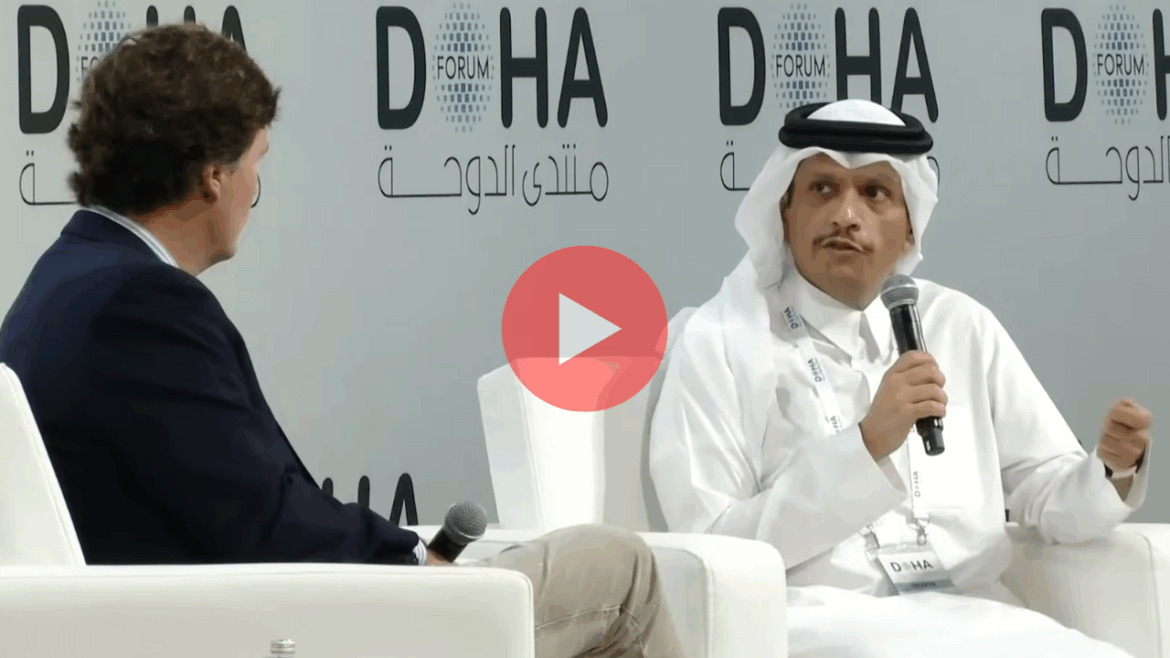
There is a reason every time the world speaks of a Gaza “ceasefire,” Doha appears at the center of the diplomatic stage. It’s not because Qatar is a neutral party. It’s because Qatar has spent the better part of two decades investing in Hamas — financially, politically, ideologically — and now wants to shape the endgame. And in phase two of the Gaza deal, the danger is simple: Israel may be maneuvered into surrendering security for illusions, while Qatar protects the very terror group it helped build.
This isn’t a conspiracy. It’s a documented fact.
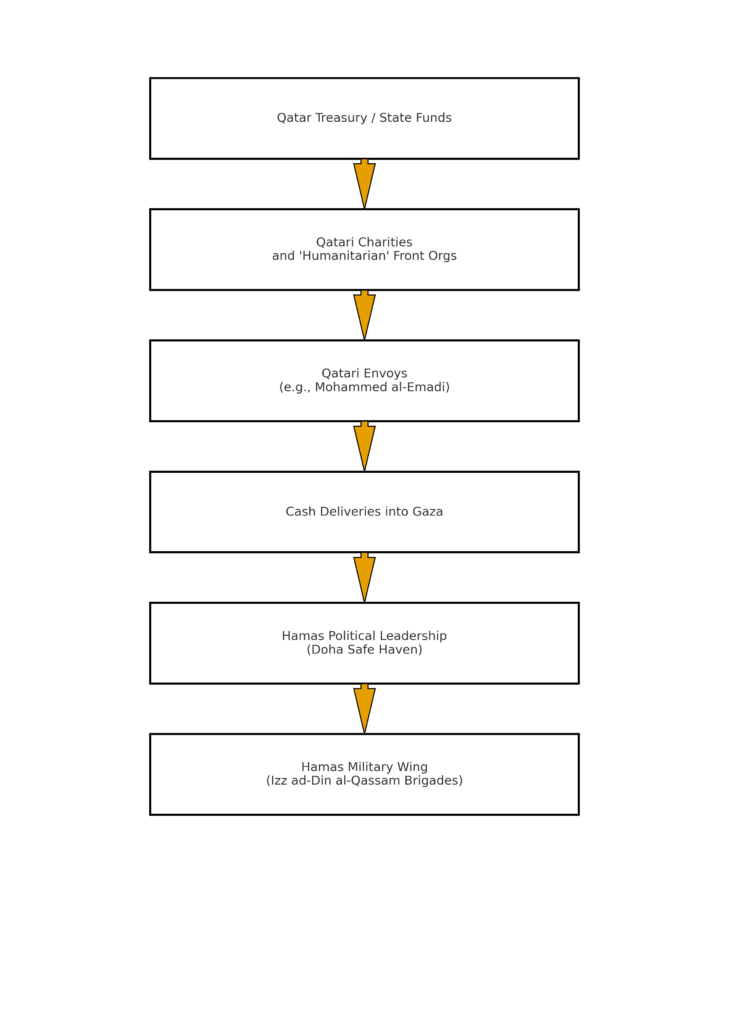
Qatar funneled hundreds of millions into Hamas-run Gaza, funded the group’s salaries, hosted its leaders in luxury, and gave political legitimacy to an openly genocidal movement. Qatar is not a “mediator.” Qatar is a benefactor of the organization that carried out October 7.
And now the same Qatar is positioning itself as the indispensable broker for a ceasefire that — if mishandled — could leave Hamas battered but alive, disarmed on paper, and ready to reconstitute the moment Israel pulls back.
If that sounds familiar, it is: the entire Middle East knows Qatar’s game.
Qatar and Turkey: The “Custodians” of Hamas
While Washington talks about “stability,” Qatar and Turkey speak in a different language — one that prioritizes Hamas’s survival. They have pushed hard for rapid Israeli withdrawal and minimal pressure on Hamas to surrender weapons.
Qatar’s prime minister has already warned that the current pause cannot become a ceasefire “until Israeli forces withdraw.”
Translation: Qatar wants Israel out before Hamas’s military machine is dismantled.
Similarly, Turkey’s foreign minister Hakan Fidan has warned that pushing Hamas too hard on disarmament would “destabilize” the process.
Destabilize for whom?
For Qatar, Hamas remains a valuable strategic asset — a pressure lever on Israel, a bargaining chip in Arab politics, and a megaphone for Islamism. Doha does not want that asset destroyed.
Israel Sees the Trap — and Netanyahu Knows It
The Israeli government, haunted by the memory of October 7, understands what “phase two” really means if taken on Qatar’s terms: a withdrawal without neutralizing Hamas.
Prime Minister Benjamin Netanyahu has been blunt: no significant withdrawal without verified disarmament. That is not a political stance — it’s a survival instinct.
Jerusalem officials quietly admit they fear Doha’s approach is meant to leave Hamas partially intact, stored weapons and command structure preserved “under supervision,” waiting for the right moment to reemerge. Israelis know what this means: a ticking bomb disguised as diplomacy.
And the Israeli public has no appetite for a replay of the past. After the worst massacre of Jews since the Holocaust, Israel will not accept foreign promises that “Hamas will behave this time.”
Hamas behaves only when it cannot fight.
Will President Trump Pressure Bibi?
President Donald Trump wants a win — a dramatic, global diplomatic victory. He has invested political capital in delivering phase two. And he will push Netanyahu to accept some form of guarantees: international monitors, stored weapons, supervised governance.
But the Israeli prime minister is facing a nation that understands the stakes too well. Israelis know the region. They know Hamas’s history. And they know Qatar’s motives.
Trump may pressure, but Netanyahu is cornered by Israeli public opinion, the IDF, and the basic logic of national security. In Israel, you cannot trade safety for applause.
The Probability of Hamas Actually Disarming: Minimal at Best
Let’s be clear: Hamas will not voluntarily disarm.
Their rhetoric may soften; they may talk about “freezing” weapons. But freezing is not disarming. Storing is not destroying. And Hamas has no incentive to give up the one thing that secures its relevance and leverage.
Based on open-source intelligence, historical patterns, and the organization’s ideological DNA, the realistic probability of full disarmament under a Qatar-managed process is between 15% and zero.
Doha does not want Hamas eliminated.
What Happens If Israel Moves Forward Without Disarmament?
Three outcomes — all bad:
1. Hamas Survives in a New Form
The group will bury weapons, rebuild tunnels, embed command posts in reconstruction zones, and wait. Qatar will pay. Turkey will cheer. And the world will pretend Gaza is “stabilizing.”
2. Israeli Withdrawal Becomes a Geopolitical Victory for Qatar
Doha will have engineered a scenario where Israel destroys Hamas militarily — only for Qatar to resurrect it politically. This is Doha’s preferred outcome: Hamas weakened, but not defeated; Israel humiliated, but responsible for rebuilding; Qatar crowned as kingmaker.
3. The Ceasefire Becomes a Fuse
If Israel withdraws while Hamas is still armed in any form, a future war becomes inevitable. The only question is timing… and how many Israelis will pay the price.
The Bottom Line
The next phase in Gaza is not about “humanitarian concerns” or “regional stability.” It is about whether Israel allows Qatar — Hamas’s most loyal patron — to dictate the terms of Gaza’s future.
Phase two is not a diplomatic process. It is an intelligence test.
If Israel insists on real, verifiable disarmament — backed by force, not promises — the future may yet be stable. But if Jerusalem bows to Qatar’s pressure and Trump’s desire for a quick win, phase two will become what Qatar hopes it will be:
A political victory for Hamas, a strategic defeat for Israel, and a quiet guarantee that the next war is already on the calendar.
Israel must not walk into Doha’s trap.