
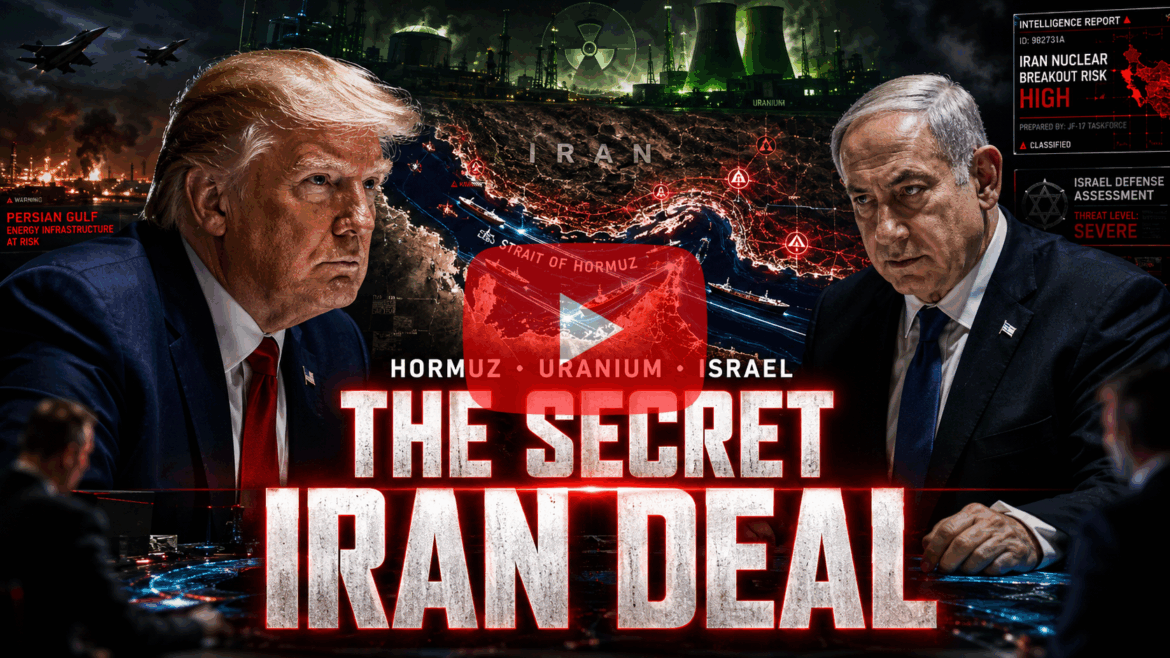
Something significant is unfolding behind the scenes between Washington, Jerusalem, and Tehran — and Israeli officials are signaling that the stakes go far beyond diplomacy.
A senior Israeli source said the Biden-era playbook is gone. The Trump administration is now moving aggressively toward a regional framework designed to reopen the Strait of Hormuz, calm the escalating energy crisis, and potentially reshape the balance of power surrounding Iran’s nuclear ambitions. Throughout the process, according to the official, the White House has been keeping Israel closely looped in.
But Netanyahu reportedly used his latest call with President Donald Trump to draw a red line.
Israel, he told the president, will not accept any arrangement that limits its ability to strike emerging threats wherever necessary — including Hezbollah positions in Lebanon. Trump reportedly answered without hesitation: Israel’s freedom to act militarily remains fully backed by Washington.
The conversation also revealed how uncompromising Trump intends to be on Iran’s nuclear program. According to the Israeli official, Trump insisted that no historic agreement will be signed unless Tehran agrees to dismantle its nuclear infrastructure and remove every ounce of enriched uranium from Iranian territory.
In other words: no cosmetic deal, no symbolic concessions, and no repeat of previous nuclear arrangements.
The Israeli source said Trump’s message was direct: if those conditions are not met, there will be no final agreement.
Netanyahu, for his part, reportedly thanked Trump for what he described as years of unwavering support for Israel’s security establishment and strategic interests.
Then came Trump’s own public statement — and it sounded less like a routine diplomatic update and more like the announcement of a major geopolitical realignment.
Writing on Truth Social, Trump revealed that he had spent the evening speaking with an extraordinary lineup of regional leaders, including Saudi Crown Prince Mohammed bin Salman, UAE President Mohammed bin Zayed, Qatar’s Emir Tamim bin Hamad Al Thani, Turkish President Recep Tayyip Erdoğan, Egyptian President Abdel Fattah el-Sisi, Jordan’s King Abdullah II, Bahrain’s King Hamad, senior Pakistani military leadership, and Prime Minister Netanyahu.
The topic, Trump said, was a sweeping “Memorandum of Understanding pertaining to PEACE” involving Iran and multiple regional powers.
He claimed that most of the agreement had already been negotiated and that only the final details remained unresolved.
One sentence stood out above all the others:
“The Strait of Hormuz will be opened.”
That declaration alone carries enormous global consequences. Hormuz is not simply another waterway. It is one of the most strategically important chokepoints on earth — the narrow artery through which a massive percentage of the world’s oil supply passes.
Reuters later reported that the emerging framework could unfold in stages: first ending the current confrontation, then stabilizing Hormuz, followed by a limited negotiation window aimed at reaching a broader long-term arrangement with Tehran.
But perhaps the most surprising revelation came from The New York Times.
According to two US officials quoted in the report, Iran may be prepared to surrender its stockpile of highly enriched uranium entirely — a concession that, until recently, many analysts considered politically impossible for the regime to accept.
If true, the region may be entering a moment few expected: not peace exactly, but a temporary restructuring of the battlefield before the next phase begins.