Whatsapp
The Mossad chief’s reported mission to Washington reveals a growing strategic divide between Jerusalem and the White House over how to confront Tehran.
Israel appears to be preparing for the possibility of another major military confrontation with Iran, but the greatest obstacle may not be Tehran itself. It may be Washington’s reluctance to finish the job.
According to a report by Axios, cited by Israel’s Channel 14, Mossad Director Roman Gofman has traveled to the United States for high-level meetings aimed at communicating Israel’s position on renewing military operations against the Iranian regime.
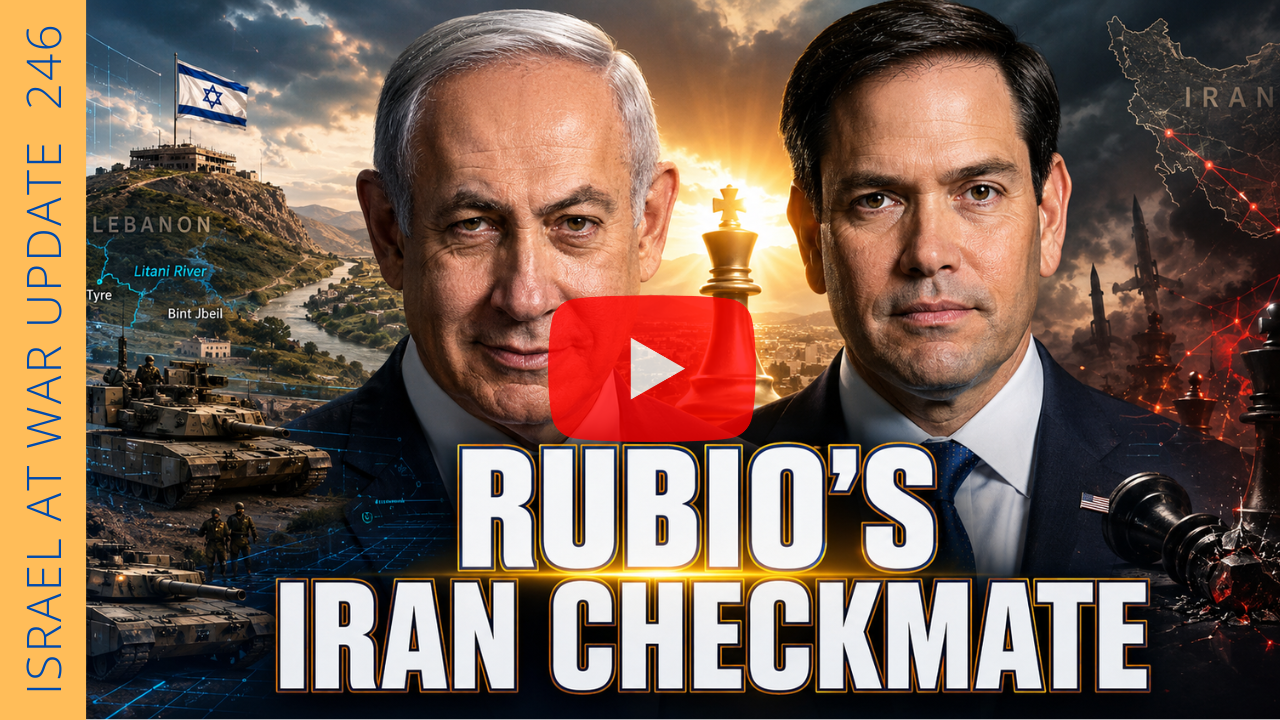
Gofman reportedly met CIA Director John Ratcliffe, with additional meetings planned with Secretary of State Marco Rubio and President Donald Trump’s special envoy Steve Witkoff. C14
The diplomatic mission exposes a fundamental strategic disagreement.
While Prime Minister Benjamin Netanyahu reportedly believes renewed military action may be necessary, Trump appears determined to exhaust economic pressure, maritime restrictions, and diplomatic negotiations before authorizing another confrontation.
The Gulf states, including Saudi Arabia, Qatar, and the United Arab Emirates, are reportedly encouraging Washington to pursue this approach.
But Israel cannot afford to confuse economic pressure with strategic victory.
The Islamic Republic has spent decades building a regional network of terror proxies, developing ballistic missiles, and pursuing nuclear capabilities. Its objective has never been merely to negotiate better economic terms. The regime’s hostility toward Israel is embedded in its revolutionary ideology.
History has repeatedly demonstrated that agreements and sanctions alone cannot guarantee that Tehran will abandon its strategic ambitions.
This is where Jerusalem and Washington increasingly diverge.
For America, Iran is one of several global challenges competing for attention. For Israel, a nuclear-capable and militarily resurgent Iran represents a potentially existential threat.
There is also a political dimension. Opposition figures in Israel have reportedly raised concerns about launching military operations under a transitional government. Yet the Iranian threat does not operate according to Israel’s electoral calendar.
Israel must maintain the freedom to act militarily, regardless of whether Washington ultimately supports renewed operations.
The immediate priority should be continued intelligence coordination, accelerated military readiness, and a clear Israeli strategy for preventing Iran from rebuilding capabilities that threaten the Jewish state.
Trump may ultimately decide that military force is necessary. But Jerusalem cannot build its national survival around that possibility.
The real question is no longer whether Iran remains dangerous.
It is whether Israel and America are prepared to confront that danger before the cost of doing so becomes substantially greater.
And if Washington chooses restraint, Israel must be prepared to act independently.