Whatsapp
Philly residents resoundingly responded to a “boycott ride” that targeted Jewish- and Israeli-owned eateries. Yet the existence of a group employing Nazi tactics reflects a growing acceptance of Jew-hatred.
If you’re looking for signs of resolve and a determination to resist antisemitism on the part of American Jewry, then Philadelphia was the place to be on Nov. 8. Still, any satisfaction about the response of Jews to an effort to intimidate them on the eve of the anniversary of Kristallnacht with a “boycott ride” against Israel needs to be tempered by one realization.
Local Jews stood up for themselves and their community in a way that did them great credit. The would-be boycotters of Jews had to realize that they had pedaled themselves into a public-relations fiasco. But unlike past confrontations, when the Jew-haters were rightly perceived as isolated extremists whose actions and ideology were seen by most Americans as beyond the pale, that cannot be said of the anti-Israel group calling itself Philly Bike on Your Left.
Their hateful rhetoric about Jews and genocide is routinely published in mainstream publications and other news outlets, and has seemingly popped up everywhere in social and academic circles. Congress members can be heard echoing the same antisemitic blood libels about Israel and characterizing the efforts of American Jews to advocate for the U.S.-Israel alliance with tropes that resemble those in The Protocols of the Elders of Zion.
That is a bitter truth to be kept in mind, even as Americans ought to be celebrating the response of Philadelphia Jewry.
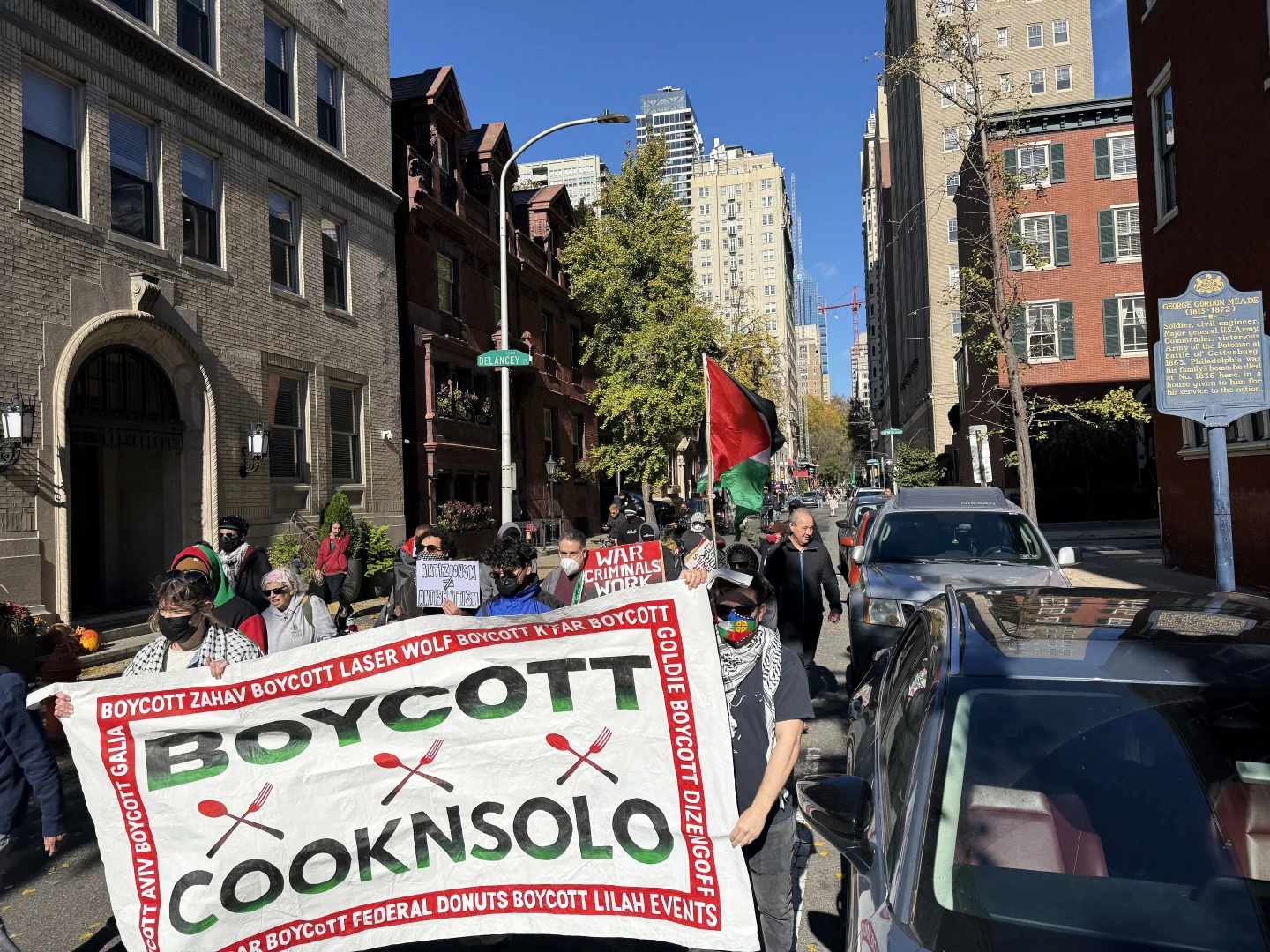
The group sought to target American Jewish- and Israeli-owned restaurants with a “boycott ride” drive-by demonstration. But the community was prepared, and large numbers of Jews turned out in force to show that they wouldn’t take such treatment lying down.
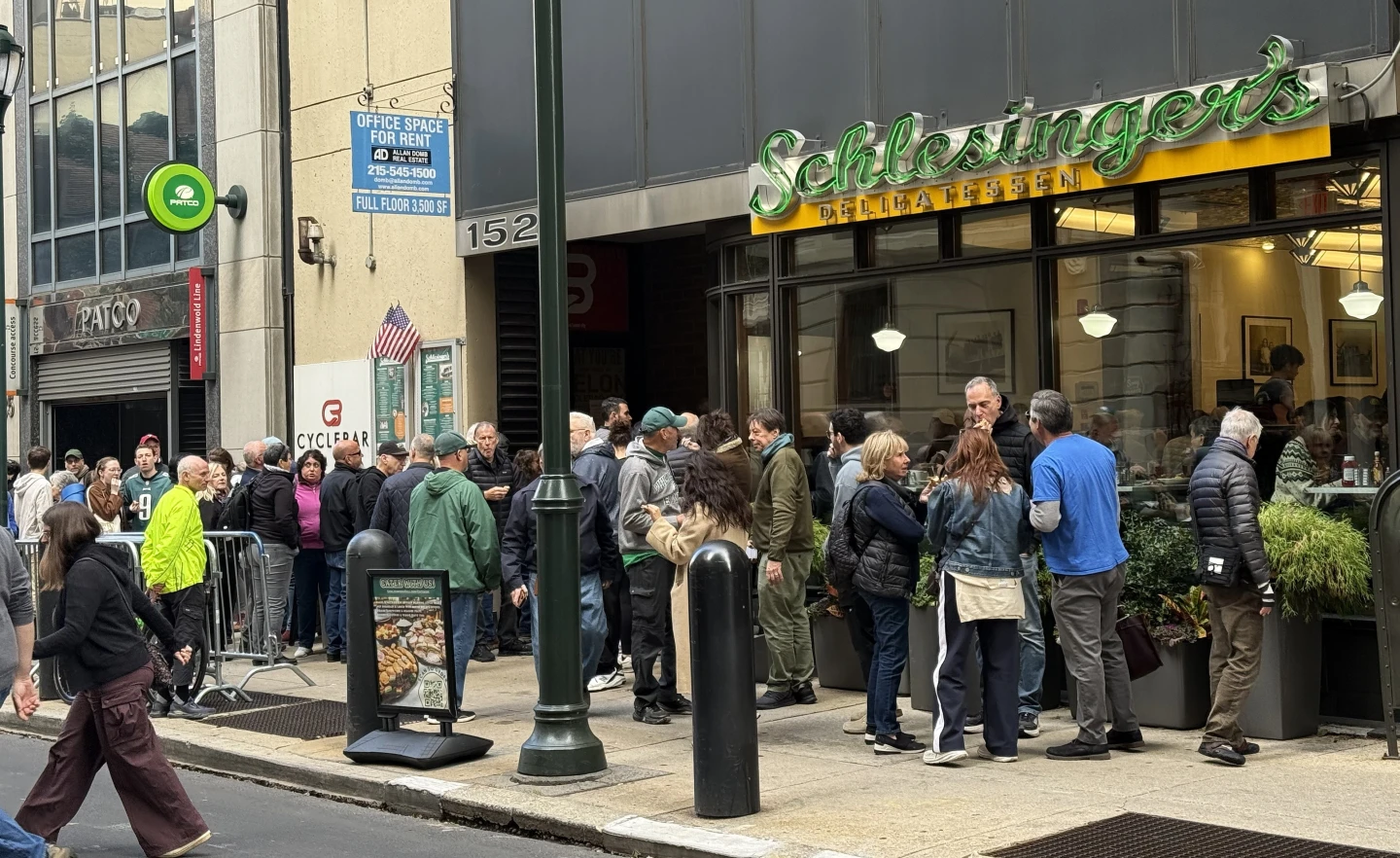
The Jews showed up
That the planned demonstration was scheduled to take place on the eve of the 88th anniversary of Kristallnacht—the German Nazi pogrom that targeted Jews and their homes, businesses and synagogues on the night of Nov. 9-10, 1938—only added to the sense of urgency on the part of the local Jewish community.
In response, as I personally witnessed, thousands of Jews—many acting on their own, without being part of any particular group—patronized the six targeted eateries, some waiting for hours to be served.
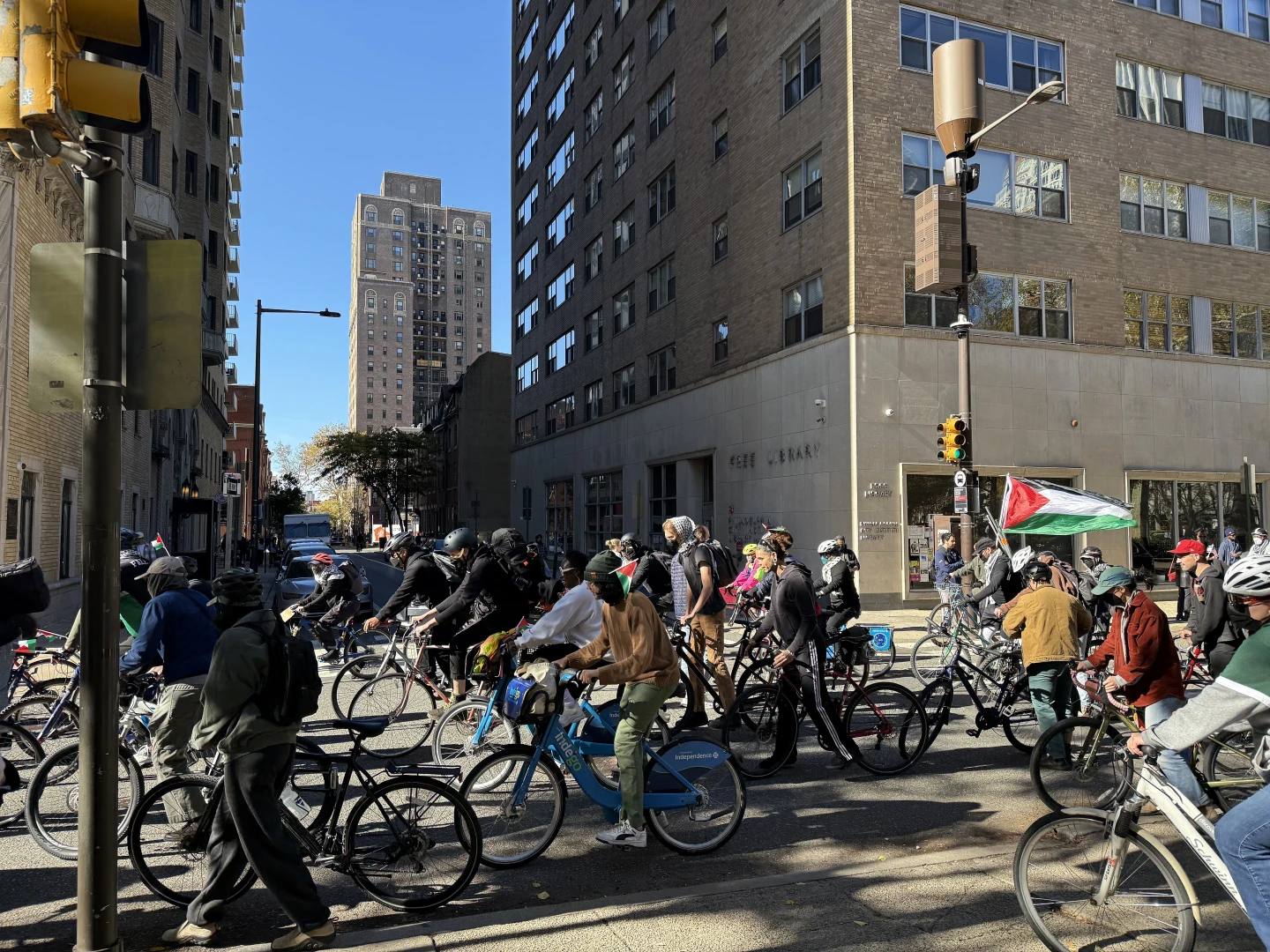
Hundreds of others showed up at Rittenhouse Square—the boycott ride’s rallying point—to confront a motley assortment of a few dozen boycotters in masks and keffiyehs, waving Palestinian flags, a few of whom claimed to be Jewish.
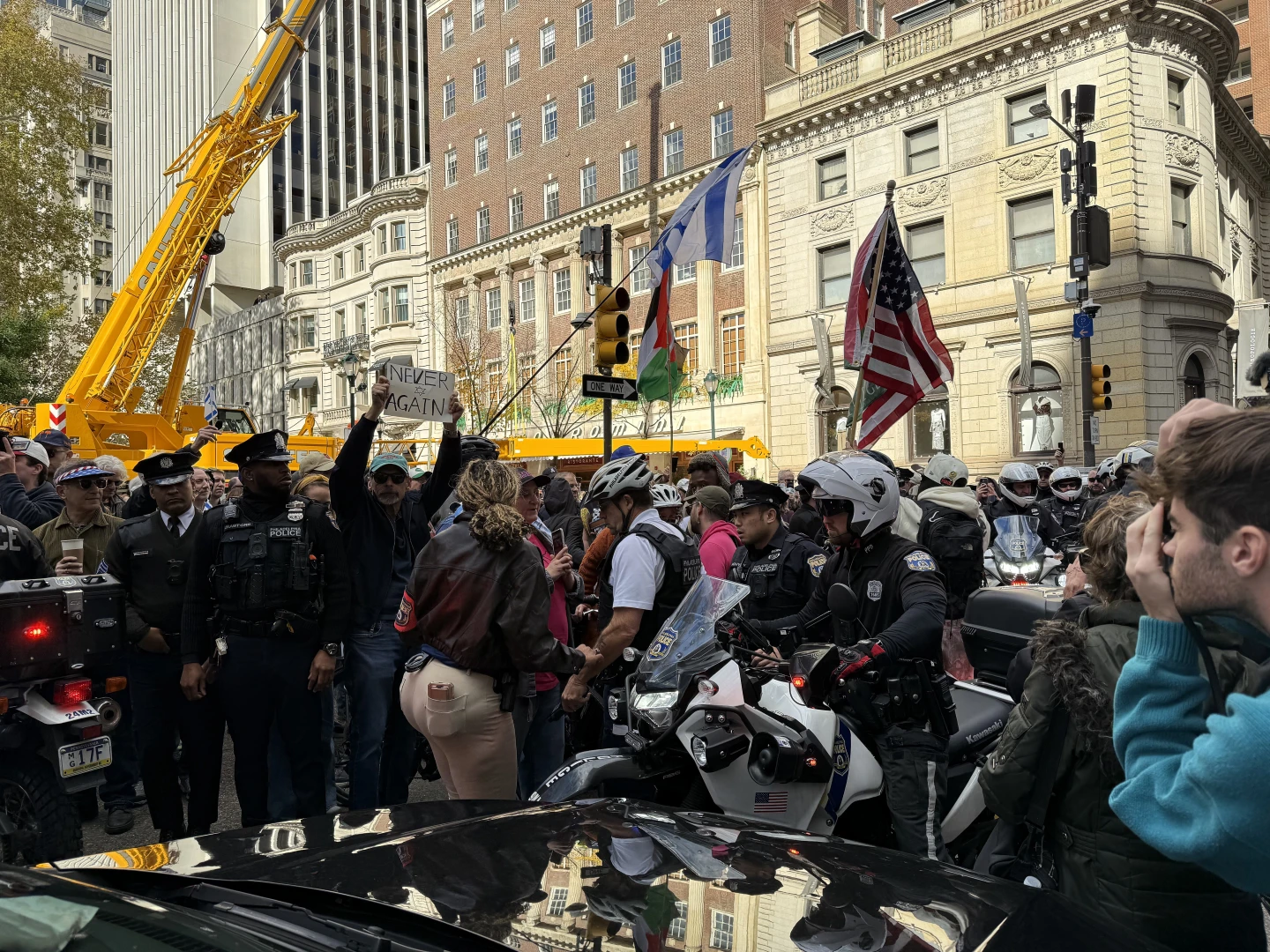
The Jewish counter-demonstrators, clearly angry about such flagrant Jew-hatred being spread by the bikers and eager to show their displeasure, vastly outnumbered the antagonizers. And despite the best efforts of police to keep the two groups separated, the situation got ugly at times, with exchanges of taunts turning to pushing and shoving before the cops created a path for the anti-Israel bikers to escape and begin their ride around the city.
But wherever they pedaled, accompanied by some sympathizers walking alongside them, they were greeted by large numbers of Jews waving Israeli flags, chanting and singing their defiance, while demanding that the anti-Israel bikers have the guts to take off their masks and show their faces.
This was a profoundly encouraging development, as well as one that was in marked contrast to most of the responses of American Jews during the past three years since the Hamas-led Palestinian Arab terror attacks on Israeli communities on Oct. 7, 2023. With a few exceptions during this period, Jews have largely failed to aggressively respond to the pro-Hamas mobs that overran city streets and college campuses.
The imperative to respond
The infamous “shelter in place” advisory put out by Columbia University and echoed by the school’s Hillel Chapter in April 2024, when anti-Israel demonstrators took over part of the campus, was not an isolated phenomenon. There was, of course, at least one large pro-Israel demonstration: the mass rally held in Washington, D.C., in November 2023. But as a general rule, the Jewish response was to stay home rather than confront those who chanted for Jewish genocide (“From the river to the sea”) and terrorism against Jews wherever they live (“Globalize the intifada”).
Whether justified or not, it gave the country the impression that Jews were either not willing to express solidarity with the half of the world’s Jewish population that lives in Israel or that they lacked the courage to answer those who singled them out for abuse and intimidation.
Why then did Greater Philadelphia Jewry turn out in such numbers this time?
Perhaps it was the Kristallnacht anniversary and the obvious parallels to Nazi efforts to target Jewish businesses. Previous “pro-Palestinian” marches had attempted to target some Jewish-owned restaurants. But the prospect of what appeared to be a more organized effort to re-enact the tragic events of the 1930s in the city where American independence was born and the Liberty Bell is displayed (which is inscribed with a quote from the Hebrew Bible) was just too much for many people to accept passively.
One shouldn’t dismiss the fact that this particular dispute involved food, even if only one of the six targeted dining places—a falafel place called “Goldie,” which had been an early target back in December 2023—was certified as kosher, something that resonates more with American Jews than rhetoric about Zionism.
The Philadelphia Inquirer later reported that an anonymous spokesperson for the boycotters denied having any knowledge of Kristallnacht. But there was also no denying the vile nature of the boycott. Though the group falsely claimed that they had chosen their targets because they were somehow connected to the Israeli military, the only common denominator between the six restaurants was ownership by Jews and, because of their cuisine, seen as appealing to the Jewish community. So the Nazi analogy wasn’t confined to the calendar, but applied to such an action no matter what day of the year it might have occurred.
Indeed, to their credit, local political leaders, including Pennsylvania Gov. Josh Shapiro and Philadelphia Mayor Cherelle Parker, condemned the event, the latter saying that “singling out businesses because their owners are Jewish is unacceptable and has no place in our city.” Sen. John Fetterman (D-Pa.) rightly derided the boycott as a “sick parade of rank antisemitism.” Even left-wing Philadelphia District Attorney Larry Krasner derided the plan and warned those who don’t like Israeli Prime Minister Benjamin Netanyahu and Israel’s war against Hamas that “the leadership of the Israeli government is your target, … as opposed to blaming all Israelis, or all Jewish Israelis, or all Jews all over the world for their beliefs, for their faith, for their ethnicity.”
Not like Skokie
At various points while Jews milled about upscale Rittenhouse Square awaiting the start of the day’s events, the conversation turned to what happened in the late 1970s in Skokie, Ill. The question was whether that was analogous to what Jews were experiencing now.
The planned march of American neo-Nazis through the Chicago suburb with a large population of Holocaust survivors is an important chapter in American Jewish history. After prolonged legal battles about its legality, in which Jews played prominent roles on both sides of the dispute, the march never took place. Still, the trauma of the survivors as they expected what seemed like an attempt to replay their tragic past still lingers in the collective memories of the community.
The uniforms and the swastikas of the would-be Skokie marchers still invoke the sort of imagery that haunts the Jewish imagination in a way that the masks, keffiyehs and Palestinian flags still do not. Yet the dilemma faced by those who turned out in Philadelphia on the eve of Kristallnacht is far worse than those of the embattled Skokie survivors.
There is a great deal of difference between what didn’t happen in Skokie and what did happen in Philadelphia that has nothing to do with the fact that the former played out in the courts, rather than the streets.
It’s that for all of the anger that the Nazis provoked, they were an isolated tiny group of extremists that were widely despised by virtually all of American society. But though the Philly boycott riders clearly miscalculated in terms of the targets they chose and their timing, they are far from isolated.
It’s true that the owners of these restaurants don’t deserve to be treated in this manner just because they are Jewish. Nor is any American Jew responsible for the actions of Israel’s government.
Peddling lies about Israel and Jews
But the problem with the boycott isn’t only that they targeted innocent people. It’s that the line they are peddling about Jews committing “genocide” or supporting an “apartheid state” is a lie. The growing support in American society for isolating the State of Israel and opposing its efforts to defend its population against genocidal Palestinian terrorists and their Iranian sponsors is based on misinformation that has been mainstreamed in the corporate media. The election of open antisemites like Michigan senator-elect Dr. Abdul El-Sayed and many others on the far left is the product of the normalization of Jew-hatred in journalism and popular culture.
Under these circumstances, the events of the past three years, including the murder of Jews in Washington, D.C.; Boulder, Colo.; as well as the attempted firebombing of Shapiro’s gubernatorial residence in Harrisburg on Passover and numerous other incidents around the globe, are what happens when such “pro-Palestinian” rhetoric is seen as acceptable discourse. Coupled with the fact that so many Jewish institutions have been essentially fortified in response to the constant threats of violence, it is the natural result of the widespread acceptance of these falsehoods about Israel and the antisemitic tropes that accompany them.
As long as such misinformation is ubiquitous in the allegedly responsible press, as well as on popular podcasts and social media, the public can’t be surprised that incidents such as the boycott ride happened. In fact, Americans should be prepared for many more such incidents in the coming months and years.
We can only hope that other communities will respond as Philadelphia’s Jews did this time when the need arises. But no one should pretend that this small victory is a sign that the beliefs of these Jew-haters are being marginalized or thrown back into the fever swamps of the far left and far right, where they belong. As hatred and bigotry against the Jewish minority become normalized throughout society, it’s clear Jews must prepare for more such challenges.