Whatsapp
For the Iranian regime, the purpose of negotiations is to force America to surrender.
From the start of the war with Iran, it was clear that the stakes couldn’t have been higher.
If the United States and Israel were to succeed in neutralizing the Iranian regime, the outcome wouldn’t just have been the removal of a monstrous threat to Israel, the Iranian people and the world.
It also would have reshaped global politics by tearing apart the web of evil spun by Russia, China and North Korea, at the center of which squatted the regime on which they all depended—the Islamic Republic of Iran.
If, however, the United States were to lose that war and the Iranian regime remained as a threat, Russia, China and North Korea would be galvanized by the perception that mighty America was in fact a paper tiger, and the whole free world would be placed in even greater danger.
The early successes of the war, which so greatly weakened Iran, suggested that the first option was eminently possible. But now the picture looks very different.
In an article in Foreign Affairs, two pro-Islamic regime analysts, Narges Bajoghli and Vali Nasr, gloat over what they see as an Iranian victory over America. They write: “The war has given rise to a new Iran, one that will reshape the [Middle East] and influence the course of geopolitics for years to come.”
Despite the fact that this is an Iranian propaganda line, it’s hard not to conclude— incredible as this may seem—that U.S. President Donald Trump is now actually dancing to the tune of Tehran.
On April 8, a ceasefire was declared between Iran and the U.S.-Israel alliance. Since then, Iran has continued to launch attacks on shipping in the Strait of Hormuz and on Gulf states.
On Tuesday night, it launched drone attacks on Kuwait killing one person and injuring more than 60. Other missiles were intercepted by U.S. and Bahraini air defenses.
Since the purported ceasefire with America, Iran has used its proxy army Hezbollah repeatedly to attack Israel military and civilian targets from Lebanon. Unsurprisingly, Israel has responded fiercely.
On April 17, after the Iranian regime, which was behaving like the mafia in the Strait of Hormuz, outrageously complained that Israeli retaliation against Hezbollah was preventing the strait from reopening, Trump pressured Israel into a ceasefire in Lebanon.
Since that ceasefire, 14 Israel Defense Forces soldiers have been killed there. No country could be expected to soft-pedal its defense in such a situation.
To defeat Hezbollah, Israel needs to destroy its nerve center in the Beirut district known as the Dahiyeh. On Monday, it was about to do so. Alarmed by this very real threat to its vital proxy, Iran threatened to walk away from negotiations with America. As a result, Trump ordered Israel not to attack Beirut and declared another ceasefire.
Three hours later, Hezbollah fired a barrage of missiles at Israel. In the early hours of Wednesday morning, a Hezbollah drone crossed into northern Israel, sending 25,000 Israelis running once more into the bomb shelters. That day, Israel and Lebanon agreed to another dubious ceasefire between the two warring sides.
It is, of course, intolerable for Trump to prevent Israel from doing what it needs to do to protect its citizens against such attacks.
Moreover, Trump’s statements appear to fly in the face of reality.
Iran is continuing to wage war against America, Israel and their allies. Throughout it all, however, Trump continues to insist that the United States will only act in self-defense; that the ceasefire is holding; and that Iran is begging for a deal.
On Wednesday, the U.S. president said talks with Iran were “going very well” and that an agreement could happen this weekend. Yet Iran’s foreign minister, Abbas Araghchi, said “no tangible progress” has been made in negotiations.
No surprise there: the pattern has set in of Trump making bellicose statements, Iran dangling concessions, Trump backing off, Iran repackaging those concessions as further threats and demands, Iran renewing its attacks and America declaring that negotiations are resuming.
So why is Trump apparently allowing himself to be played like a sucker? And how is Iran able to play him?
After all, the regime has been gravely weakened by the war. America’s naval blockade is having a devastating effect on the Iranian economy, with a 90% drop in exports, oil production slashed in half and electricity supplies severely restricted.
The answer is that Trump is in a trap of his own making through two fundamental and related mistakes.
He thinks he can negotiate the end of the war. The first rule of negotiation, however, is to do so from a position of strength.
Trump could have used Israel as leverage to weaken Iran by crippling Hezbollah. Instead, by holding Israel back from delivering the decisive blow against Iran’s proxy army, he has enabled Iran to use Hezbollah as leverage against Israel.
He has thus weakened his negotiating position. That’s because he thinks his strategy is a winning one.
He thinks that when his blockade of Iranian shipping really starts to bite and Iran runs out of money and food, the regime will start to negotiate seriously to avoid the country being totally destroyed.
But the Tehran regime is run by fanatics who will sacrifice the people, the economy and the country in accordance with their belief that the Shia messiah will be brought to earth through an apocalypse.
Trump thinks every problem can be solved by a deal that only he has the skill to pull off. He doesn’t seem to grasp that some agendas are so uncompromising they are simply non-negotiable.
Trump’s insistence on a deal has given Tehran the scent of victory in its nostrils. For the regime, a deal represents the surrender of America. Every negotiation is viewed as a sign of American weakness and a spur to redouble its attacks.
For the regime, the purpose of these negotiations is not to get the best deal possible for Iran. It’s to force America to surrender.
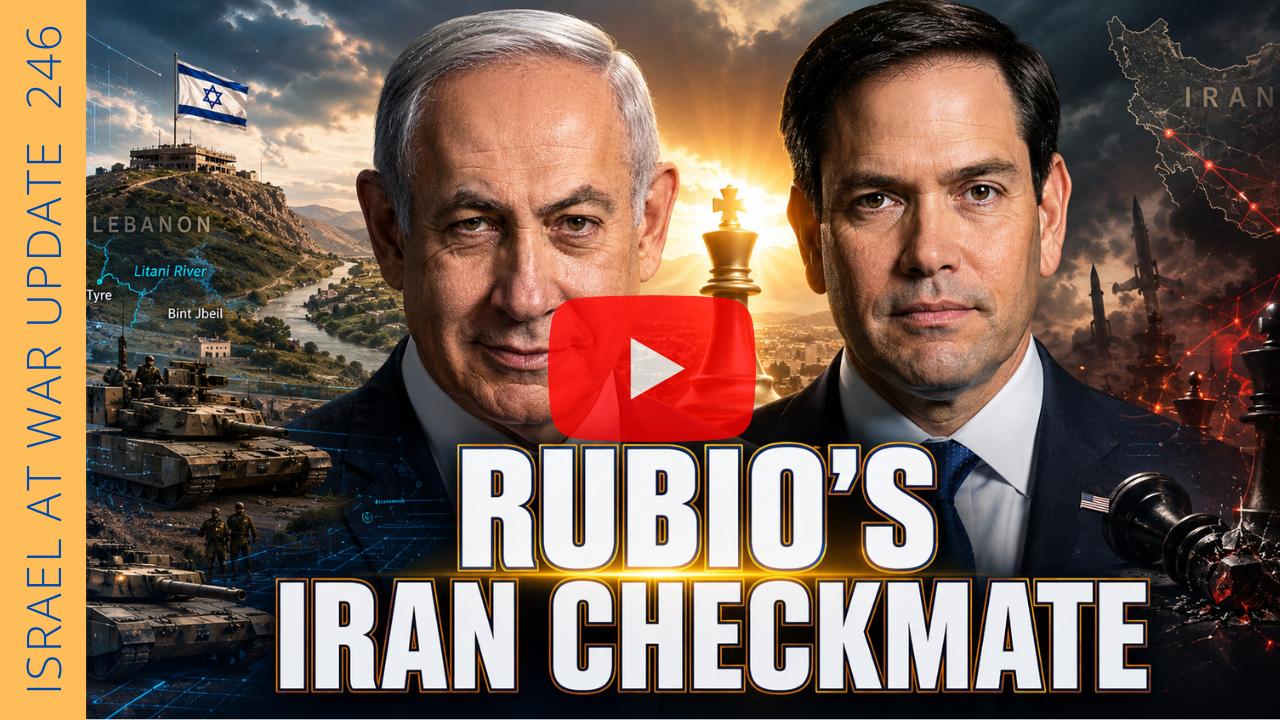
America’s apparent failure to grasp this is potentially tragic. Secretary of State Marco Rubio has said the regime is now willing to discuss parts of its nuclear program that it previously refused to negotiate, signaling potential movement in the talks.
But any deal will be worthless. The Iranian regime is a world-class cheater that has never kept to the terms of any deal it’s ever made, never observed any ceasefire, telling lies reflexively in accordance with the Islamic principle of taqqiya, which makes it mandatory to lie in the cause of Islam.
In any event, what exactly is there to negotiate if Trump’s terms are, as they purport to be, the unconditional surrender of Iran?
Behind Trump’s strategic errors, however, lies a more profound—and profoundly worrying—issue. The Iran war is deeply unpopular with the American people. In part, that’s because Trump has never made the case to them that it’s being waged because Iran poses a mortal threat to America itself.
But mostly it’s because American humiliation in Iraq and before that Vietnam, along with decades of anti-West propaganda in American schools and universities, has now made Americans viscerally averse to “boots on the ground” anywhere and any U.S. troops being placed in danger.
A culture that no longer accepts the need for sacrifice in the cause of a just war is a culture that has no future. That’s the desperate situation now of Britain and Western Europe. America is in danger of going the same way.
What started as the United States finally grasping that it had no option but to neutralize Iran, because it was getting perilously close to obtaining nuclear weapons to hit the “Great Satan,” now threatens to turn into a repeat of the 2015 nuclear deal debacle.
That was when Iran used bait-and-switch tactics until the Obama administration surrendered America’s security to fanatics who would eventually get the bomb.
President Trump is now at serious risk of turning into a second Obama. Not just Israel, but also the entire free world, should be alarmed.