
When President Donald Trump sat down for an interview with CBS, he didn’t sound like a man under threat. He sounded like a man declaring victory.
Responding to a warning from Iranian regime insider Ali Larijani, who suggested Trump would “pay the price” for the elimination of Supreme Leader Ali Khamenei, the President was dismissive.
“I have no idea what he’s talking about. Who is he? I don’t care. He’s already been defeated.”
That wasn’t bravado. It was strategic messaging.
For decades, Tehran’s leadership thrived on intimidation — threats, proxies, deniable terror networks, and endless chants of “Death to America” and “Death to Israel.” But what Trump articulated in that interview reflects a fundamental shift: the Islamic Republic is no longer dictating the tempo. It is reacting. And it is losing.
Larijani’s warning is the language of a regime in retreat. The old playbook — threaten assassination, promise revenge, posture for regional dominance — only works when you hold leverage. According to Trump, that leverage is gone.
“He wanted to take over the entire Middle East,” Trump said, referring to the Iranian regime’s ambitions. “But because of me he gave up and surrendered to all those countries.”
That line is more important than critics admit. For years, Iran’s strategy was clear: dominate Iraq, entrench in Syria, arm Hezbollah in Lebanon, fund Hamas in Gaza, threaten the Gulf states, and encircle Israel. It was a crescent of coercion designed to push America out and isolate Jerusalem.
Instead, what emerged in recent years was a counter-coalition. Arab states normalized relations with Israel. Regional powers recalibrated. Iran found itself economically strangled and militarily exposed. The very architecture Tehran had built began cracking.
And then came the war.
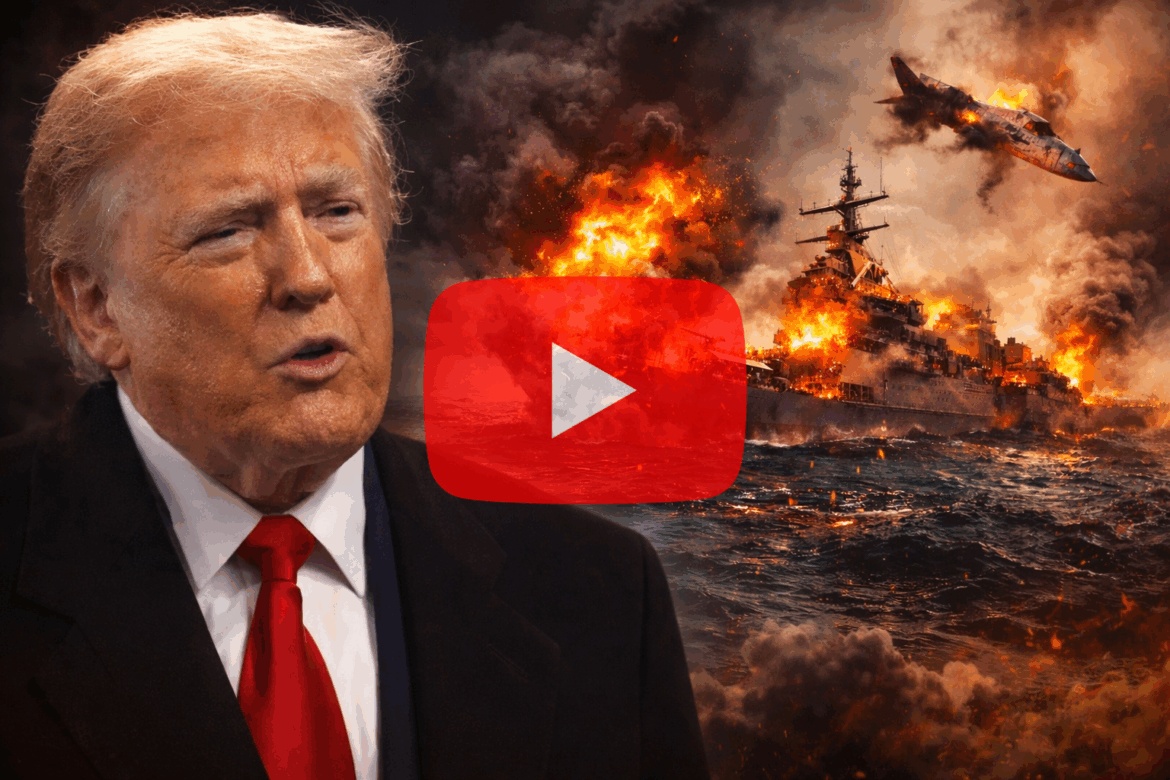
“The work we’ve done is simply amazing,” Trump declared. “The missiles are exploding into fragments. The factories are exploding. The Iranian Navy is gone. It’s on the sea floor. 42 ships in 6 days. Their Air Force is gone.”
If even half of that is accurate, it represents one of the most decisive conventional dismantlings of a hostile military infrastructure in modern Middle Eastern history.
Forty-two ships in six days. That’s not a skirmish. That’s annihilation of maritime capability. An air force neutralized. Missile production shattered. Military factories reduced to rubble.
This is not the endless stalemate the world has grown accustomed to. This is dominance — rapid, overwhelming, technologically superior dominance.
For Israel, the implications are profound. A weakened Iran means a weakened Hezbollah. A crippled Iranian Navy means safer shipping lanes and reduced pressure on global energy markets. A dismantled missile infrastructure means fewer projectiles aimed at Tel Aviv and fewer threats to American bases in the Gulf.
Critics will call the rhetoric exaggerated. Opponents will warn of escalation. But the reality is simpler: deterrence works when your enemies believe you will act — and when they see the consequences of crossing that line.
Trump’s tone was not defensive. It was declarative. “We are winning at levels never seen before, and quickly.”
In the Middle East, speed matters. Momentum matters. And perception matters even more.
For decades, Iran projected inevitability. Now, the projection is reversed. The regime threatens, but the world sees burning factories and sunken ships.
And that changes everything.