
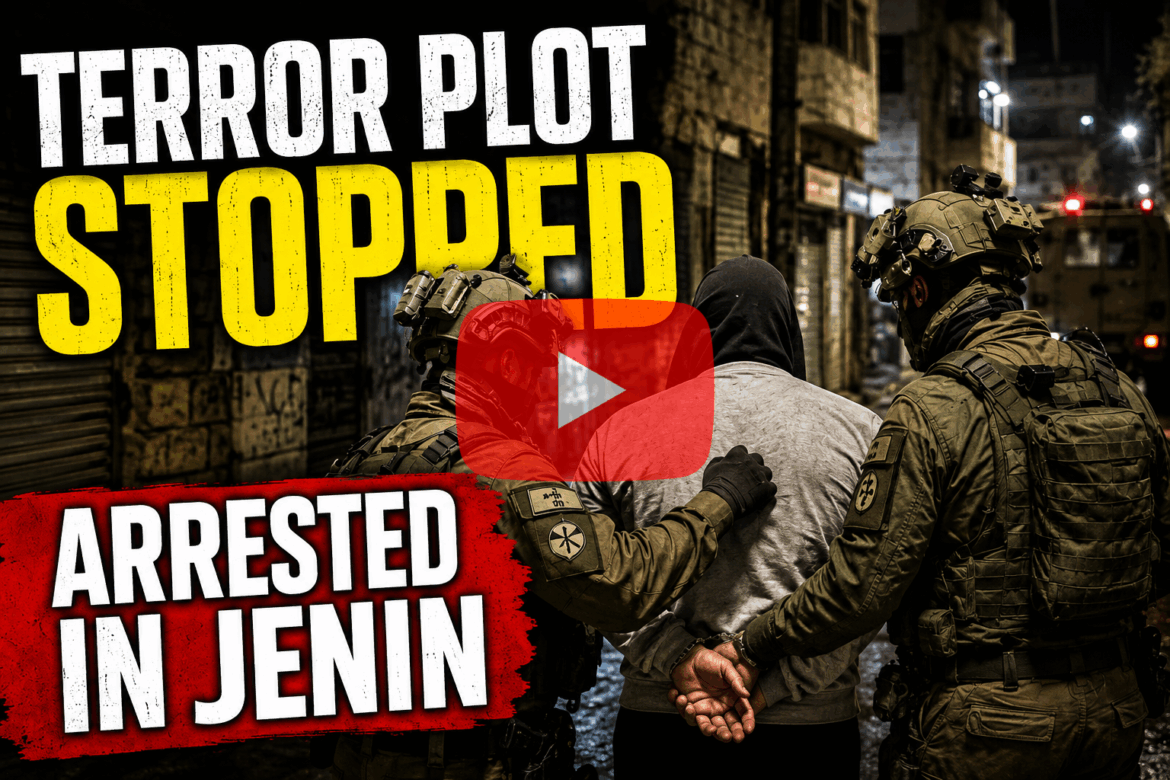
Israeli commandos carried out another important counterterrorism operation in northern Samaria this morning, arresting a Palestinian suspect in Jenin who the IDF says was preparing to carry out a terrorist attack against Israelis.
The suspect, Imam Hazem, is not an isolated figure.
He is the son of Fathi Hazem, who was killed last week while attempting to stab Israeli troops operating in Jenin. His brother, Raad Hazem, carried out the deadly April 2022 shooting attack on Tel Aviv’s Dizengoff Street, murdering three Israelis.
According to the IDF, following his father’s death, Imam Hazem openly expressed his intention to carry out an attack targeting Israeli civilians and security forces.
Israel did not wait to find out whether those threats were serious.
Soldiers from the elite Duvdevan Commando Unit entered Jenin and apprehended Hazem before he could allegedly translate those intentions into action.
That is precisely how counterterrorism is supposed to work.
For years, much of the international conversation surrounding Israeli operations in Jenin, Shechem and other terrorist strongholds in Judea and Samaria has focused almost exclusively on Israeli military actions. What is frequently ignored is what those operations are designed to prevent.
The IDF is not entering these areas randomly. Israeli forces routinely operate on the basis of intelligence indicating that terrorist cells, weapons networks or individual attackers are preparing attacks.
Sometimes the public only learns what was prevented after an arrest.
That appears to be the case here.
And Hazem’s arrest was not the only recent operation.
In a separate raid yesterday in the village of Sanur, near Jenin, Israeli troops arrested another Palestinian whom the IDF says was planning an attack against Israeli civilians.
Two suspected plots. Two arrests. And potentially two attacks that never reached Israel’s streets.
This represents one of the central lessons Israel learned from October 7: security cannot be based solely on responding after terrorists cross the border, open fire or detonate a bomb.
Intelligence must be converted into action before the enemy strikes.
That means maintaining freedom of operation throughout Judea and Samaria, including inside places such as Jenin.
Every successful arrest may look like another routine overnight military operation.
But sometimes the most successful counterterrorism operations are precisely the ones in which nothing happens afterward—because Israeli soldiers reached the terrorist first.