Whatsapp
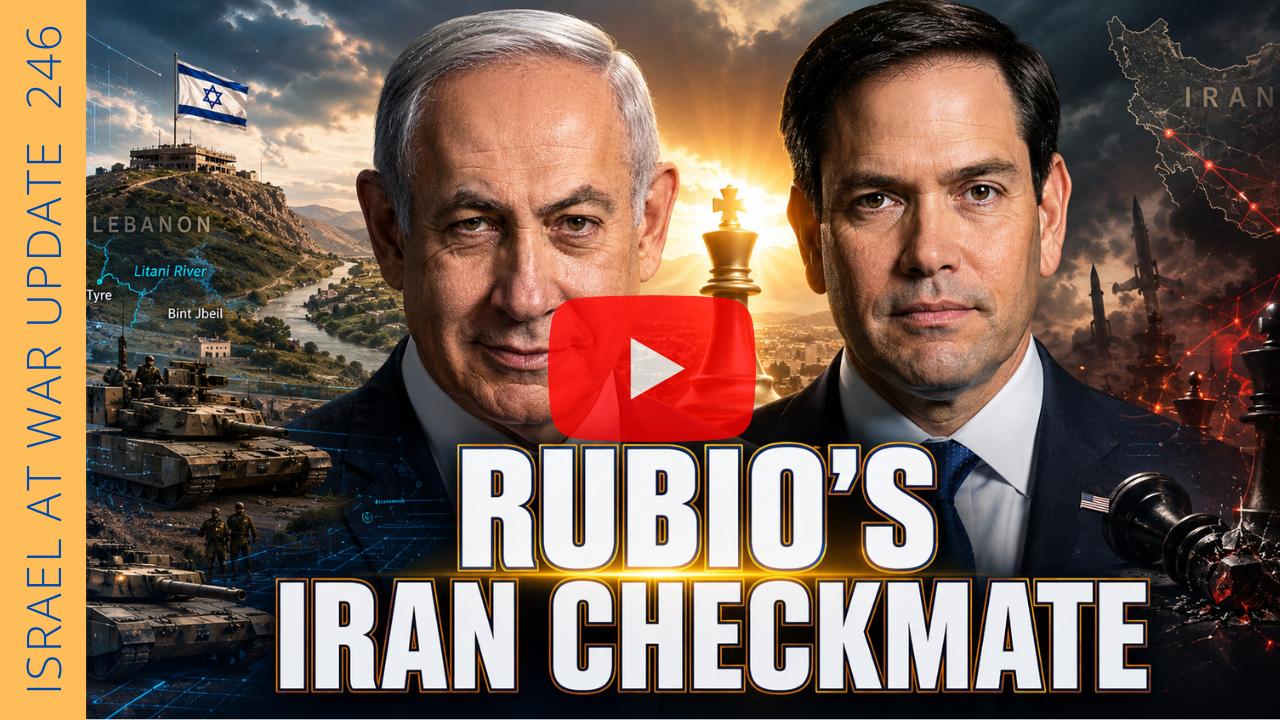
In a moment when the possibility of open confrontation between Washington and Tehran no longer feels theoretical, U.S. Secretary of State Marco Rubio has laid out what amounts to a structured indictment of the Iranian regime. His remarks were not framed as a formal declaration of war. They were, however, unmistakably an argument for why one may be coming.
Rubio’s case rests on a simple premise: the Iranian threat is not limited to uranium enrichment.
First, he underscored Iran’s massive ballistic missile arsenal, particularly its short-range systems. These are not symbolic weapons. They are specifically designed to target American bases across the Middle East and to threaten U.S. regional partners. In other words, even without a nuclear warhead, Tehran already holds at-risk thousands of American personnel and critical infrastructure.
Second, Rubio highlighted Iran’s anti-ship capabilities. From anti-ship cruise missiles to swarm tactics and naval mines, the regime has invested heavily in tools meant to disrupt shipping lanes and challenge the U.S. Navy. In an era where global trade depends on maritime stability, this is not a regional nuisance—it is strategic coercion.
Third, Rubio emphasized that Iran’s conventional arsenal is built with America in mind. This is not an abstract rivalry. These weapons systems are designed to deter, threaten, and, if necessary, strike U.S. forces and interests.
Perhaps most revealing is what Iran refuses to discuss. Tehran consistently blocks negotiations over its ballistic missile program. That refusal alone signals intent. Nations pursuing defensive stability do not categorically shield offensive missile expansion from diplomacy.
Rubio also pointed to Iran’s space-launch activities—widely seen by defense analysts as a pathway toward intercontinental ballistic missile development. Even now, Iran fields missiles capable of reaching most of Europe. The trajectory is clear: range expansion is not slowing despite crushing sanctions and a battered domestic economy.
Then comes the nuclear dimension.
Following the reported destruction of key nuclear infrastructure in June, Iran was warned not to restart its program. Yet intelligence assessments indicate attempts to reconstitute elements of it. Rubio drew a sharp distinction between civilian nuclear energy and weapons development: peaceful programs build visible reactors and import fuel. They do not enrich uranium underground to 20% and 60% purity while simultaneously developing missiles capable of carrying nuclear warheads.
That combination—advanced enrichment plus expanding missile capability—is what transforms suspicion into strategic alarm.
The deeper message in Rubio’s remarks is this: waiting may no longer reduce risk. If Tehran continues advancing both delivery systems and enrichment capacity, the window for preventing a nuclear-armed Iran without war narrows rapidly.
Whether Washington chooses to act is a political decision. But Rubio’s argument is clear: the threat matrix is already in place. The question is not whether Iran is building leverage. It is whether the United States is prepared to neutralize it before that leverage becomes irreversible.