
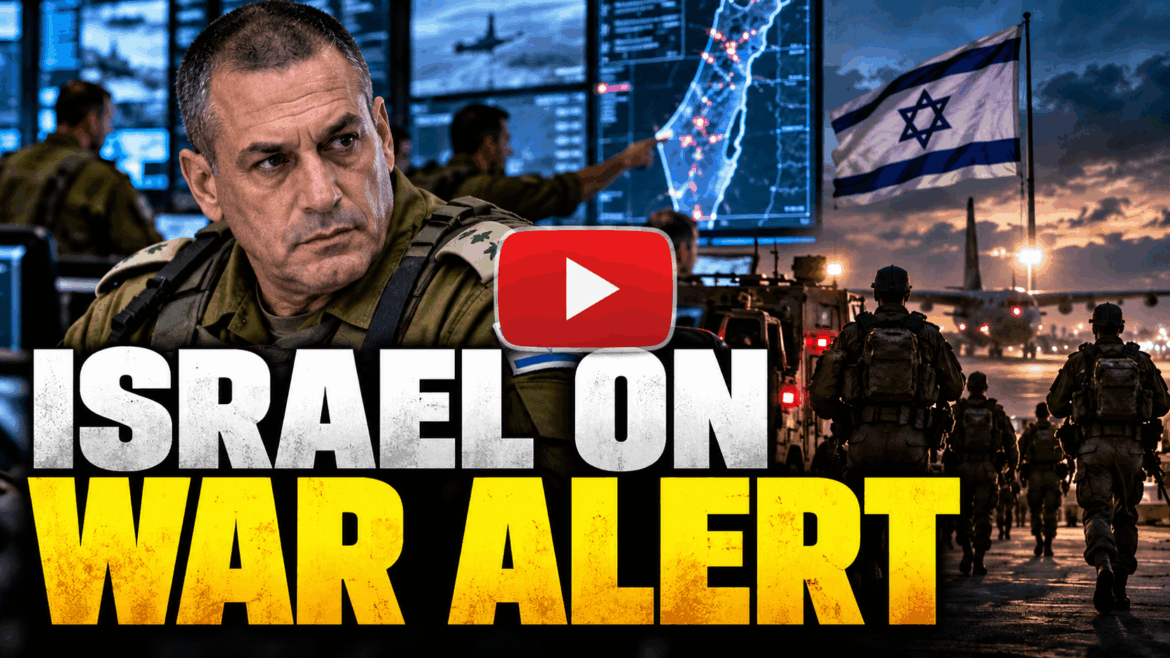
As Israel approaches its October 27 elections, the IDF is freezing soldiers’ leave, reinforcing Judea and Samaria, and increasing readiness across every front. The question is whether this is simply election security—or preparation for something far more serious.
Israel is entering the final week before its national elections with its military operating at the highest level of alert.
IDF Chief of Staff Lt. Gen. Eyal Zamir has ordered a sweeping freeze on soldiers’ leave beginning Thursday, October 22, while reinforcing operational commands and deploying additional forces across multiple fronts.
The official explanation is straightforward: ensuring that Israel’s October 27 elections take place safely and without disruption.
But the scale of these preparations raises an important strategic question. Is the IDF responding to specific intelligence about potential attacks, or is Israel preparing for the possibility that its enemies will exploit the elections to initiate a broader confrontation?
Judea and Samaria: The Immediate Concern
One of the most significant decisions is the reinforcement of Central Command, responsible for Judea and Samaria.
The Paratroopers Brigade headquarters will establish a dedicated task force headquarters between the Samaria and Binyamin regional brigades, supported by additional military units.
This is not merely a symbolic deployment.
Judea and Samaria remain a potential flashpoint, particularly given the possibility of coordinated terrorist attacks, armed unrest, or attempts by Palestinian terrorist organizations to exploit political uncertainty inside Israel.
An attack during election week could have consequences far beyond the immediate battlefield, potentially disrupting voting, forcing emergency security measures, and testing Israel’s political leadership.
The Threat Is Not Limited to One Front
Zamir has also directed commanders to reinforce military readiness in the air, at sea, and on land, while increasing the presence of senior officers inside operational command centers.
These measures provide Israel with the ability to respond rapidly should developments escalate along the Lebanese border, in Gaza, or against the backdrop of the continuing confrontation with Iran.
However, heightened readiness is not proof that war is imminent. The military has not publicly identified a specific attack plan behind these orders.
What the measures do demonstrate is that Israel’s military leadership is unwilling to accept unnecessary operational vulnerabilities during a sensitive national event.
Democracy Must Continue—Even Under Threat
The IDF is also preparing at least 850 military polling stations, including facilities serving soldiers stationed beyond Israel’s borders.
This is an important reminder of Israel’s unique reality.
While much of the democratic world treats elections as primarily political events, Israel must simultaneously protect its civilian population, maintain military readiness, and ensure that soldiers defending the country can exercise their democratic rights.
Zamir’s central message is that the elections must proceed on schedule.
Yet the broader strategic lesson extends beyond October 27.
Israel’s enemies have repeatedly sought to exploit moments of perceived weakness or distraction. The IDF cannot allow an election campaign, a political transition, or internal disagreements to create an opening for another strategic surprise.
The real test is not whether Israel can conduct elections under threat. It is whether Israel can maintain overwhelming military readiness while doing so.
The coming days will reveal whether these precautions remain defensive—or whether developments across Israel’s multiple fronts demand something more.